Are Video Testimonials Better Than Text? The Data Says Yes
Marketers often get stuck chasing the old standards for social proof. But consumer trust has undergone a significant shift. 71% of consumers feel more confident in a product's claims after watching a video testimonial, compared to just 38% after reading written reviews.
That gap is not shrinking. Text testimonials, while easy to skim, simply don't carry the same weight anymore. They lack the face, the voice, the genuine emotion.
By 2026, a staggering 88% of customers trust video testimonials as much as they do personal recommendations. Think about that. Your customers want to see real people, hear their stories, and connect with authenticity. They trust what they see and hear over what they simply read on a screen. This isn't just a trend; it's the new benchmark for credibility.
How customer feedback evolved over time
Customer feedback has been around for ages. The first documented customer service complaint dates back to 1750 BC, showing that feedback has always been central to commerce (as cited by Customer Thermometer).
Testimonials themselves started gaining traction in the late 1800s, with Quaker Oats being among the first to use them. Back then, it was all about static text, like a written letter of recommendation, displayed proudly in ads.
But static text has a problem.
The world has shifted from believing everything written to demanding authenticity and genuine experiences. We've moved from printed words to dynamic, visual feedback for a reason.
That's why video testimonials are more effective today. They provide:
- Emotional Connection: Facial expressions and tone of voice convey genuine enthusiasm.
- Increased Trust: Seeing and hearing real people makes the message more believable. 63% of online shoppers trust video testimonials more when the speaker appears unscripted.
The move to video mirrors the broader trend toward multimedia content. People remember 95% of a video but only 10% of written text. The visual and auditory elements combine to create a far more impactful and memorable message. Check out these proven ways to boost website conversions with customer testimonials to see how video can increase sales.
And this isn't some minor advantage. Websites with video are 53 times more likely to rank on Google’s first page.
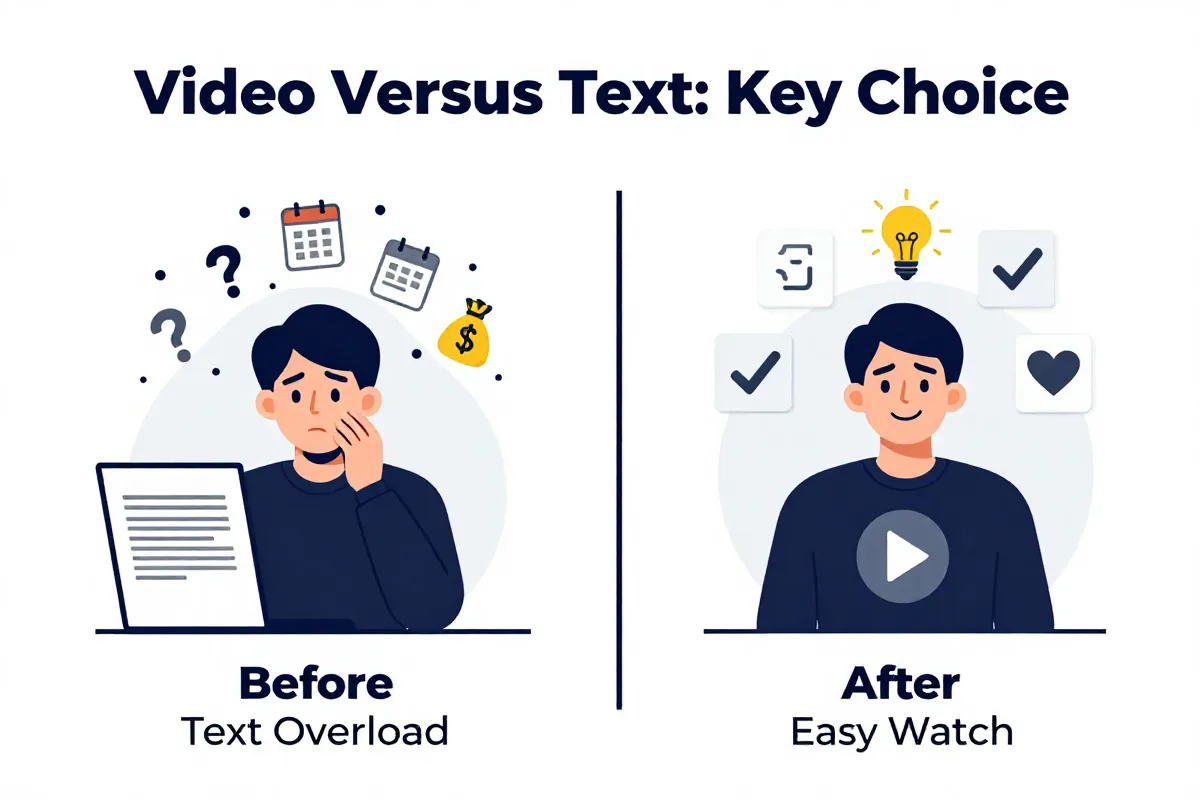
Video vs text comparison
Video testimonials bring more to the table than text. They combine visual and auditory elements, resulting in a much higher level of engagement.
Text testimonials are great for skimming, no doubt. Think of them as quick soundbites. Video testimonials, on the other hand, offer a deeper dive. They allow viewers to connect with the speaker on an emotional level.
The psychological effect is clear:
- Text: Works well to provide varied experiences from customers quickly.
- Video: Creates an emotional connection, enhancing trust.
But text can be easily faked. Video is harder to manipulate convincingly. That's why video testimonials featuring real names and locations were rated as 2.7x more credible than anonymous ones.
The bigger issue? Engagement. People remember 95% of a video, but only 10% of written text. It's a no-brainer for creating lasting impressions.
To gain more understanding on the effectiveness of video testimonials, consider reading how we drive growth with authentic customer videos.
This boils down to how people process information. Visual and auditory cues combined are a powerful way to get your audience hooked.
Next up, it's vital to understand how to produce high-quality video testimonials to maximize their impact.
Psychological reasons why video works better
Video works better because it taps into our subconscious. The power of mirror neurons and emotional contagion can't be overstated.
Seeing a human face and hearing a voice triggers an immediate, subconscious trust response that text can't replicate. It all comes down to how our brains are wired.
Our brains are wired to mimic what we see. These neurons fire both when we perform an action and when we observe someone else performing that same action. That's how we learn, and it's how we empathize. It also helps create a sense of trust with the speaker.
But it gets better. This mimicry extends to emotions through a phenomenon called emotional contagion.
- Seeing someone smile makes us feel happier.
- Hearing their enthusiastic tone makes us believe them.
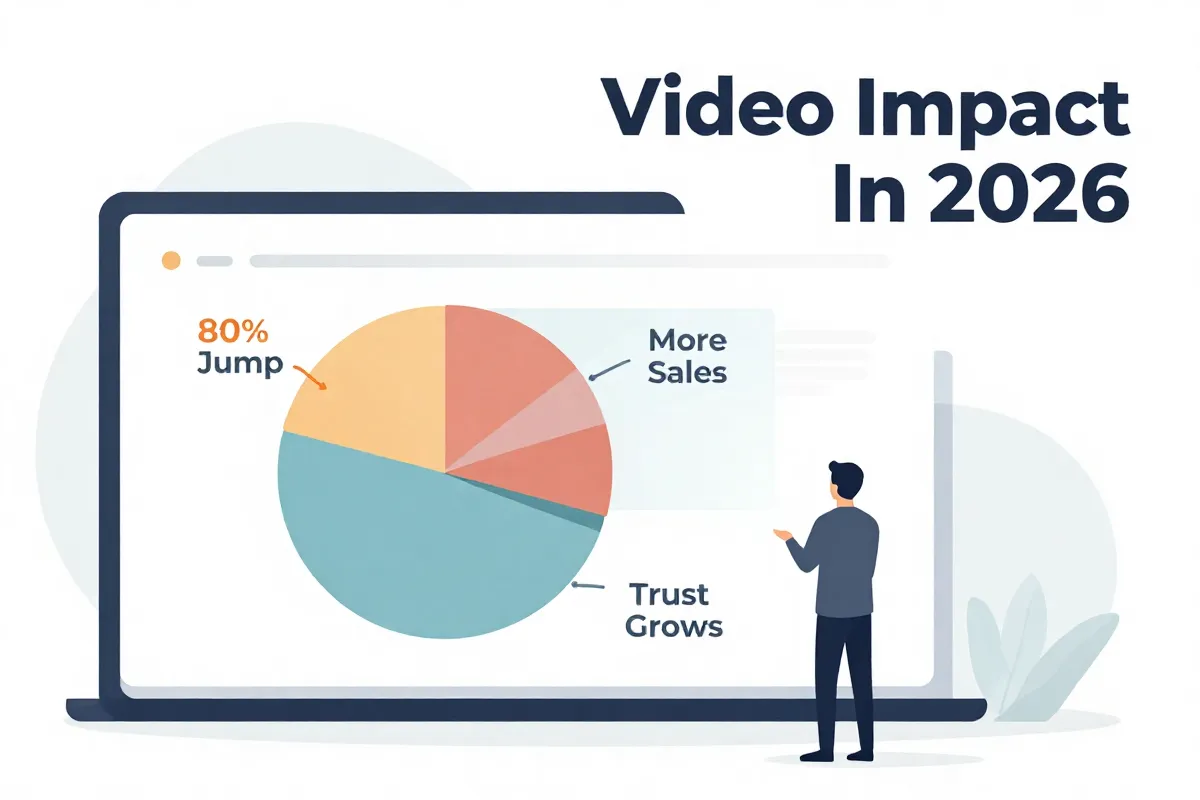
Think about it. Body language and facial expressions add layers of meaning that words alone can't convey. When someone shares their genuine excitement in a video, that feeling becomes infectious. And because of this, testimonials in videos can increase conversion rates by 80%.
Now, what's the next step to create high-quality video testimonials to maximize their impact?
Why the brain remembers 95% of video content
The fact that viewers retain 95% of a message when they watch it in a video, compared to a measly 10% when reading it in text, isn't accidental. It boils down to how our brains process information.
The "dual coding theory" offers a solid explanation.
Our brains process visual and verbal information simultaneously through separate channels, creating interconnected mental representations. Think of it as creating two sets of notes, visual and verbal, that reinforce each other. When you see and hear something at the same time, your brain creates a richer, more detailed memory. That's why video sticks.
The key benefits:
- Enhanced Memory: Visuals act as memory cues, making the information easier to recall.
- Deeper Understanding: Combining visuals and audio can clarify complex ideas.
But here’s the thing: it's not just about seeing and hearing. Video engages us emotionally, triggering those mirror neurons and fostering a sense of connection (as discussed earlier).
And the inverse is true. Text alone relies solely on the verbal channel, often requiring more cognitive effort to construct a mental image. Now that you understand why visuals matter, it's time to ask for reviews and create video testimonials from your customer base.
What the 2026 data says about conversion rates
According to 2026 data, businesses incorporating video testimonials see an average sales increase of 49% compared to those relying solely on text. The shift to video isn't just a preference; it's a straight shot to ROI.
Video testimonials can boost sales page conversions by 80%. Think about it: that's nearly doubling your conversion rate simply by adding authentic video feedback to your sales pages.
Here’s why you should be paying attention:
- Increased Trust: 88% of customers trust video testimonials as much as personal recommendations.
- Higher Engagement: Viewers are more likely to watch a video than read through text.
- Better ROI: Businesses using video testimonials see a substantial increase in sales.
And that's not all. Marketers who use video generate 66% more qualified leads annually. So, what are you waiting for? It's time to start producing video testimonials.
If you're seeking to further refine your testimonial approach, discover how to ask for reviews effectively and ethically.
But here's the rub: don't just throw any video up. Make sure they're authentic, feature real customers, and tell compelling stories. Generic, staged videos can backfire, eroding trust instead of building it. Ensure your video is high quality but also portrays authentic customer experiences. According to this 2026 study, quality and authenticity have a 2.7x higher credibility rating over anonymous reviews.
The bigger win? Including video testimonials in emails can increase click-through rates by 300%. Think of the impact of your campaign with video testimonials that increase click-through rates and conversions.
How unscripted videos build more trust
According to 2026 data, 63% of online shoppers trust video testimonials more when the speaker appears unscripted. So ditch the Hollywood polish.
Authenticity converts.
Viewers connect with realness. That shaky camera, the "umms" and "ahhs," even the occasional barking dog in the background? They scream genuine. Customers can sniff out a fake faster than you can say "focus group."
Raw video content builds more trust because:
- It feels relatable.
- It's inherently more transparent.
Think about it. A highly produced, scripted video can feel impersonal. Like a commercial. And viewers are increasingly resistant to polished advertising. (By the way, if you're looking to get started, here's how to ask for reviews.)
Unscripted videos highlight the human element. You're seeing the genuine reaction of a satisfied customer. You're hearing their unedited thoughts.
The downside? It takes guts. You're putting your brand on the line and trusting your customers to represent you well. But the reward is worth the risk.
More trust. More conversions. It’s the raw deal.
So, how do you start capturing that raw video content?
Why real names and locations triple credibility
Testimonials with real names and locations are 2.7x more credible because viewers can easily verify the speaker's identity. Video amplifies this effect.
It's far easier to fake a name and a city in a text testimonial than to convincingly fabricate a video featuring a non-existent person from a bogus location.
Consider this:
- Verification: Real names can be cross-referenced on LinkedIn or company websites.
- Location: Showing the speaker in their actual work environment adds another layer of authenticity.
The digital world is full of smoke and mirrors. Verified reviews provide a critical antidote. People want to know the person is who they say they are, and video makes it much harder to hide behind a fake profile.
But it’s not just about catching the fakes. It’s about the positive signal it sends. When a customer is willing to put their name, face, and location on a testimonial, it shows they genuinely stand behind the product. How do you go about capturing raw video testimonials?
When text testimonials are better than video
Text testimonials still have a place, especially when dealing with information-dense products. When you need to showcase highly-specific technical specs, video can be cumbersome.
Think about it. Scrolling through lines of code or comparing detailed product features is far easier in a bulleted text list than pausing and rewinding a video.
And there's the issue of accessibility.
- Screen readers can easily parse text for visually impaired users.
- Video requires captions or transcripts, which, while helpful, aren't always perfect.
Plus, not everyone can crank up the volume. In quiet environments, like libraries or open-plan offices, text shines.
Then there are bandwidth issues. Let's be real, not everyone has blazing-fast internet. Downloading and buffering a video can be a pain. Text loads instantly, ensuring everyone can access the information they need, regardless of their connection.
This fails because they are skimmable. People can read customer feedback in seconds. But to effectively increase conversions, you'll want to look into ways to boost website conversions with customer testimonials to determine which type is right for you.
Different styles of video testimonials to use
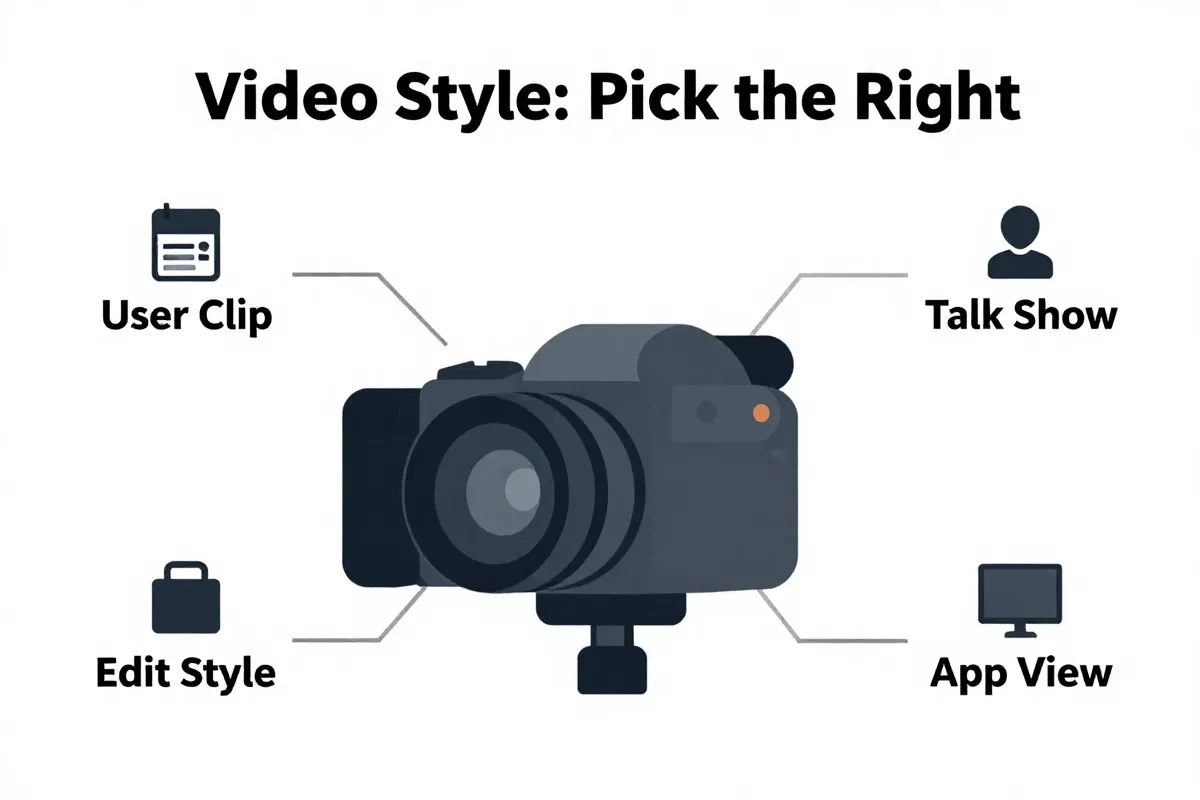
There's no single "best" style; it depends on your brand and audience. User-Generated Content (UGC), professionally shot interviews, and animated/screen-share reviews each bring something unique to the table.
UGC feels incredibly authentic. Think customers filming themselves with their smartphones, sharing their genuine experiences. This approach thrives on realness.
Professional video, on the other hand, offers polish. Expect well-lit interviews, crisp audio, and carefully crafted narratives. It adds credibility, but can feel a bit staged if not done right. For guidance on driving growth with authentic customer videos, explore our resources.
Finally, consider animated or screen-share reviews. Especially for software, these can visually walk through how a user is actively using your product or service. They excel at explaining features and benefits in a clear, concise way. The weakness? They lack that human touch.
Here's a quick breakdown:
- UGC: Most authentic, lowest production cost, potentially inconsistent quality.
- Professional: High credibility, higher production cost, risk of feeling staged.
- Screen Share: Best for software demos, clear explanations, less personal connection.
Optimizing testimonials for different platforms
Video testimonials, like spices, should be used judiciously to enhance the overall flavor of your marketing. Deploy them correctly, and you'll see conversions rise; get it wrong, and you risk turning off potential customers.
The key is understanding the nuances of each platform and tailoring your approach accordingly.
- Website Landing Pages: This is where high-impact testimonials shine. Place them strategically near calls to action or key product features to build trust and encourage conversions.
- Social Media (TikTok/Reels): Short, punchy, and visually engaging is the name of the game here. Think bite-sized stories that grab attention within the first few seconds. Vertical video is a must.
- Email Marketing: A targeted video testimonial can do wonders for your click-through rates (CTR). Including video testimonials in emails can increase click-through rates by 300%. But remember, keep it short and relevant to the email's content. Nobody wants to watch a five-minute saga in their inbox.
And don't forget about A/B testing! Experiment with different placements, styles, and lengths to see what resonates best with your audience on each platform. What works on your landing page might bomb on TikTok, and vice versa.
Collecting video testimonials on a budget
Collecting video testimonials doesn't have to bankrupt you. Founders can grab killer video and text without shelling out for expensive equipment.
Forget hiring a full production crew. You can do this remotely and on a shoestring. (The "pro" look can be a turn-off anyway).
Here's how:
- Leverage Smartphone Cameras: Today's smartphones boast impressive camera quality. Encourage customers to use their own devices for authentic, unfiltered testimonials.
- Invest in a Low-Cost Microphone: Audio quality is crucial. A simple lavalier microphone (under $30) can dramatically improve sound clarity.
- Use Free Video Editing Software: DaVinci Resolve and OpenShot offer powerful editing capabilities without the hefty price tag.
- Create a Simple Shot List: Guide your customers with a few basic prompts to keep their testimonials focused.
The real trick? Removing friction.
We built Testimly to streamline this entire process. Our platform lets you collect both video and text testimonials without the hassle of chasing customers or wrestling with complicated software.
Testimly does away with expensive equipment. Founders can collect both video and text testimonials without draining your bank.
The problem with generic solutions? They lack focus.
With Testimly, you send a simple link. Your customer records their testimonial directly through their browser. No downloads, no fuss. No barking dogs.
But there's more.
You can even provide pre-written scripts and talking points to help your customers feel confident on camera. The best part? You own your content. We believe in fair pricing and complete customer ownership. Driving growth with authentic customer videos shouldn't be difficult. Now, take it a step further by discovering how to ask for reviews effectively and ethically.
How to ask customers for a video review
The secret to a killer video testimonial? Make it easy for your customer. The harder you make it, the less likely they are to do it.
Timing is everything. Reach out shortly after a positive interaction (like a successful purchase or a resolved support ticket) while their enthusiasm is high. Don't wait weeks; strike while the iron's hot.
Here’s a blueprint for a perfect ask:
- Personalize the outreach: Avoid generic emails. Refer to their specific purchase or interaction to show you value their business.
- Offer an Incentive: It doesn't have to be extravagant, but a small discount, freebie, or early access perk can go a long way.
- Provide a Simple Script or Prompt: Overcome the "blank screen" fear by giving them a starting point. Suggest a few key points they could cover.
- Set Expectations: Be upfront about the time commitment (e.g., "a quick 30-second video") and how the testimonial will be used.
- Thank Them: It's a simple gesture, but goes a long way to show appreciation for their time and effort.
And to really grease the skids, make the recording process as frictionless as possible. Don't make them download apps or create accounts. Give them a direct link to a simple recording tool.
Need more insights? Check out our comprehensive guide on how to ask for reviews. It's a deep dive into crafting the perfect request.
Because if your customer feels valued, it reflects in the testimonial.
Ethical use and authenticity in the age of AI
Video testimonials can be faked. It's time to address how to verify video authenticity to prevent deepfakes or manipulation. Otherwise, your customers won't trust them.
In an era where AI can conjure convincing realities, the onus is on you to ensure your social proof is genuine. Don't assume viewers will simply "trust" a video.
Here’s the play:
- Demand Transparency: Ask customers to film in environments where they can't use AI filters. Think: their cluttered office, not a green screen.
- Cross-Reference Identities: Confirm the reviewer's name, location, and role with their LinkedIn profile. If things don't add up, it's a no-go.
- Reverse Image Search: Run screenshots of the video through Google Images. Look for signs of digital manipulation or reused stock footage. (It's rare, but worth the sanity check.)
- Listen for "AI Tells": Deepfakes often have audio glitches or unnatural speech patterns. Train your ear to detect these subtle anomalies.
The bigger issue? The risk of eroding trust far outweighs the benefit of a "perfectly polished" but potentially fake testimonial. Focus on raw authenticity over artificial perfection.
And you will also want to keep ethical marketing in mind. Ensure your testimonials comply with advertising standards. Disclose any incentives you offered to customers for creating the video. This isn't just about avoiding legal trouble; it's about building a brand rooted in transparency and honesty.
Ready to get real?
Common questions about video vs text
Video vs. text - it's not always an either/or choice. Here are the questions I get asked all the time.
Common questions about video vs text
You're probably wondering if video testimonials will tank your site speed. The short answer? Not if you're smart about it.
- Optimize: Compress your videos and use a reliable hosting service.
Lazy loading can be your best friend. That is, videos only load when a user scrolls them into view, preventing initial page load from taking a hit. Configure video settings so that video files don't play automatically, which could slow down your page load time. Users report that site speeds decreased by .15 seconds when they leveraged a reliable hosting service. (Make sure your hosting service has high-speed bandwidth.)
Are video testimonials too expensive for small businesses? Not anymore.
Smartphones have made high-quality video accessible to anyone. The trick is to focus on authenticity, not perfection. And remember, free editing software (like DaVinci Resolve) can polish things up without breaking the bank.
Should you use both video and text together? Absolutely.
A hybrid strategy gives you the best of both worlds. Use video for emotional impact and building trust, but supplement with text for quick information and accessibility. Think of it as a balanced diet for your marketing efforts. Remember, including video testimonials in emails can increase click-through rates by 300%.
Should you choose video or text?
Should you choose video or text? Don't choose. Go hybrid.
The "either/or" mentality is a trap. Video grabs attention and builds emotional connections, while text offers detailed information and boosts accessibility. Use both.
Combining the two gives you the best of both worlds:
- Video: Use it for high-impact moments (landing pages, social media).
- Text: Use it for detailed product specs and to ensure accessibility for screen readers.
Think of video as the opening act and text as the deep dive. Use video to hook your audience, then provide detailed information to those who want it. After all, you want to cater to different learning styles.
The bigger issue? Many marketers focus solely on one or the other. That cuts your reach in half. By combining video and text, you cater to diverse preferences and maximize your impact. Remember, including video testimonials in emails can increase click-through rates by 300%.
Collect testimonials in minutes
The easiest way to get video and text reviews from your customers. Start for free and build trust instantly.