The Psychology of Why Customer Testimonials Work
Social proof is the psychological phenomenon where individuals mimic the actions of others, believing these reflect correct behavior in uncertain situations. This powerful force guides consumer decisions, building customer trust and validating choices through the collective experiences of peers, acting as a potent conversion driver.
Key Characteristics:
- Leverages inherent human tendency to follow the crowd.
- Significantly reduces buyer hesitation and perceived risk.
- Validates product or service quality through external endorsement.
- Shapes buyer psychology by presenting relatable experiences.
We live in an era of infinite choices, making purchase decisions incredibly difficult for your customers. Businesses pour millions into slick ad campaigns, yet often, a single, unfiltered sentence from a stranger carries exponentially more weight and convinces buyers.
By the end of this guide, you will understand the deep psychological triggers that make testimonials the ultimate conversion driver, enabling you to leverage authentic social proof without falling prey to common pitfalls of fake reviews or generic marketing fluff.
What is the psychology of social proof?
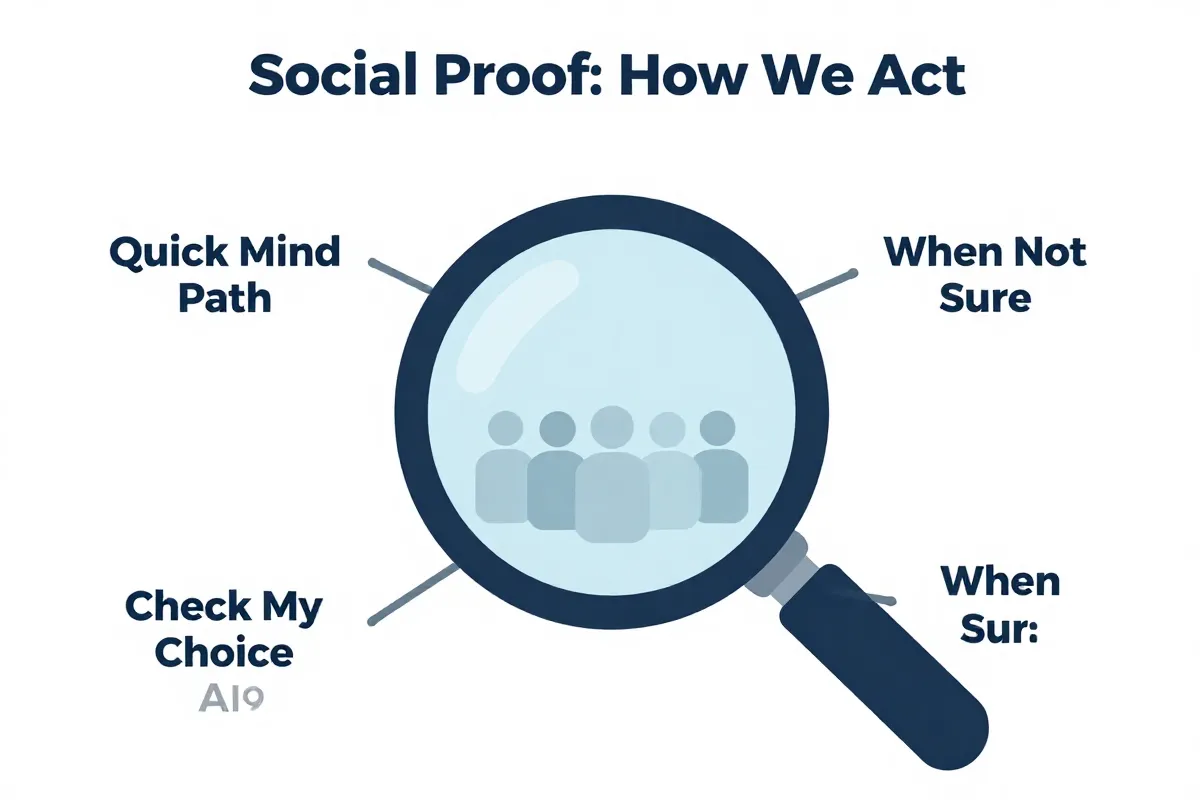
The social proof principle is a fundamental psychological mechanism where you, as a human, instinctively mimic the actions of others. It acts as a powerful mental shortcut, guiding your decisions when faced with uncertainty.
You simply look to what others are doing, assuming their behavior is correct. This gives you a clear path forward, validating your choices without needing to analyze every option yourself.
When you're unsure how to act, you scan your environment for cues. Dr. Katarzyna Sobczak-Rosochacka notes that this psychological impulse compels people to seek out how others behave in similar situations.
It’s about collective wisdom. If many people endorse a product or service, you perceive it as reliable and trustworthy. This creates an immediate validation loop.
This universal behavior forms the core of why testimonials hold such immense power. You trust real experiences. You trust what your peers have already tested and approved, as explained further on the concept of social proof.
Why uncertainty and similarity drive buyer behavior
Confidence in your own choices falters when options multiply. This is where uncertainty and perceived similarity become crucial drivers in your buying process.
When you encounter something new, especially a significant purchase, a natural lack of confidence in your own consumer judgment kicks in. You’re asking yourself: "Is this the right choice for me?" This doubt opens the door wide for social proof.
You instinctively seek to minimize potential regret or wasted money. Testimonials from others act as a powerful reduction of risk, offering reassurance that you are making a smart decision.
But it's not just any testimonial that resonates. You are drawn to people who seem like you. Whether it’s shared demographics, similar needs, or comparable aspirations, that sense of connection amplifies trust.
This desire for relatable experiences explains why you often weigh the opinions of similar strangers so heavily, sometimes even as much as your own social circles, guiding your decisions with insights from online reviews. Seeing someone "just like me" succeed with a product strengthens your belief.
This direct emotional and rational connection makes those specific reviews incredibly persuasive. It bypasses generic marketing noise.
Brief history of word of mouth and advertising
Word-of-mouth was the original growth engine for any business. Trust, built on one person's experience shared with another, drove early economies.
Ancient civilizations relied heavily on personal referrals and direct endorsements. This form of social proof predates any formal marketing effort.
Formal advertising, however, slowly began to emerge. The first written advertisement appeared on Egyptian papyrus around 3000 BC, offering a reward for a runaway slave.
Centuries passed before print technology revolutionized outreach. William Caxton released the first printed advertisement in England during 1472, promoting a book he published.
Later, public spaces became prime ad real estate. By 1835, New York City introduced its first billboards, fundamentally changing how brands communicated.
You can trace the history of advertising through these pivotal moments. Each format evolved, from papyrus to digital displays.
But the core need for human validation never changed. You still want to know if a product works for someone else, particularly someone like you.
This enduring desire for real-world proof means testimonials, in their various forms, remain incredibly powerful. They cut through the noise.
How our brains process testimonial storytelling
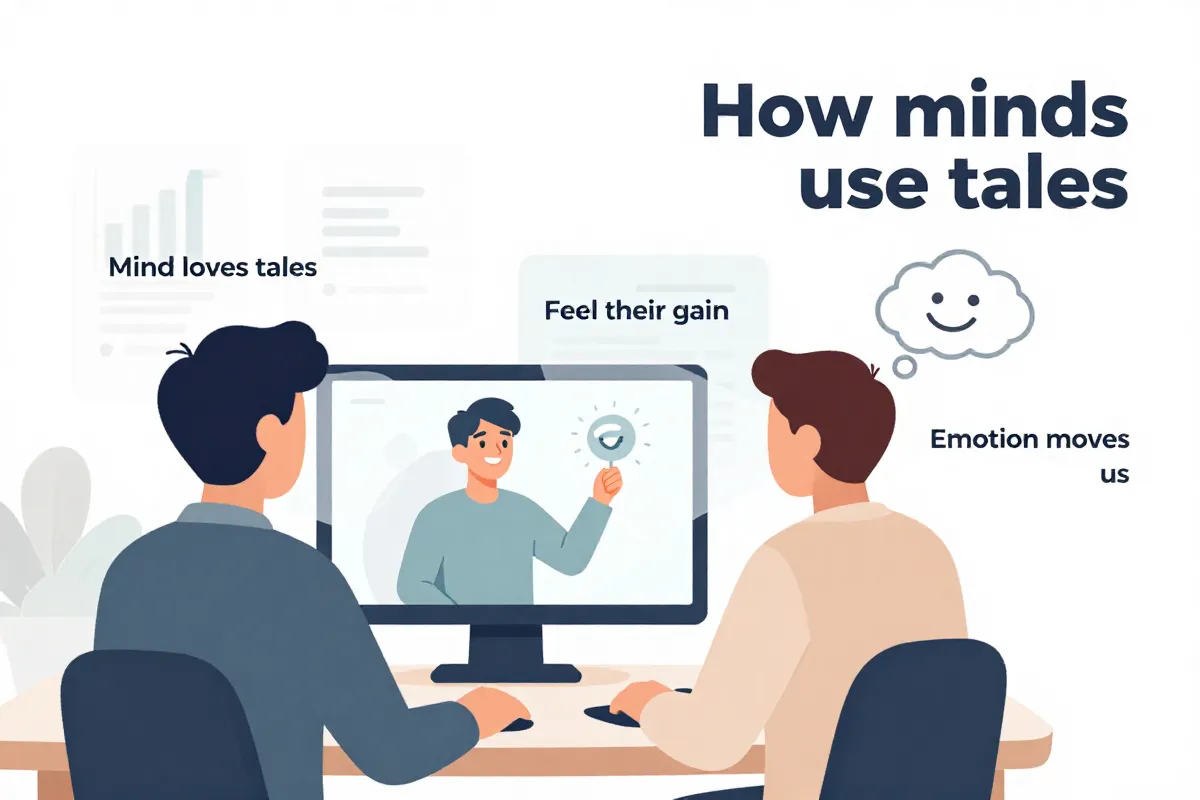
Your brain processes testimonial storytelling not as mere information, but as an experience it almost lives itself. This happens because stories engage deep neurological pathways that static facts simply cannot touch.
Testimonials leverage narrative psychology, which shows how human minds are hardwired for stories. A compelling narrative, even a short one, activates emotional centers far more powerfully than a bulleted list of features.
When you read or watch someone else's success story, mirror neurons in your brain light up. These specialized neurons allow you to internally simulate the actions and feelings of the person sharing their experience.
This neural mirroring lets you implicitly imagine yourself achieving the same positive outcome. You don't just hear about their success; you feel a version of it yourself, fostering trust and connection.
Dry, fact-based advertising, conversely, often stays in the logical, analytical parts of the brain. It struggles to create that visceral, imaginative leap that testimonials naturally induce.
Because of this, a testimonial isn't just proof; it's a blueprint for your potential success. It shows you what’s possible through someone else's relatable journey.
Specific cognitive biases that favor testimonials
Testimonials thrive because they tap into predictable human cognitive biases, mental shortcuts that simplify decision-making and build trust almost subconsciously. These ingrained patterns of thought make your customers more receptive to the experiences of others, transforming hesitation into confidence. Understanding these biases allows you to craft messages that truly resonate.
Confirmation Bias: Seeing What You Expect
Confirmation bias causes people to seek, interpret, and favor information that confirms their existing beliefs or desires. If a potential customer already has a positive inclination towards your product (or hopes it will solve their problem), testimonials provide the 'proof' they're looking for. They reinforce that initial positive gut feeling.
This bias makes it easier for you to solidify a prospect's interest. A testimonial becomes a mirror, reflecting back their own unspoken hopes and validating their potential choice.
Availability Heuristic: The Easily Recalled Story
The availability heuristic describes our tendency to overestimate the likelihood of events that are easily recalled from memory. When you present compelling testimonials, especially with visual or auditory elements, those positive outcomes become readily "available" in the customer's mind.
This means a memorable success story makes your product's benefits feel more common and attainable. It's not just a theoretical solution; it’s a vivid, easily imagined reality for them.
Halo Effect: Extending Positive Impressions
The halo effect is a cognitive bias where a person's overall impression of another person or product influences their feelings and thoughts about that entity's specific traits. A strong, positive testimonial creates a "halo" around your brand.
If one aspect of a customer's experience (e.g., great results) is highlighted, that positive feeling spills over to other perceptions like customer service, ease of use, or overall value. It makes your entire offering appear more favorable.
Authority Bias: Trusting Experienced Voices
Authority bias is the tendency to attribute greater accuracy to the opinion of an authority figure and be more influenced by them. While not always a "formal" authority, a successful user often holds a form of experiential authority. They've been through the journey your prospect is considering.
Their endorsement, born from real-world success, carries significant weight. You instinctively trust someone who has achieved what you desire, even if they're not a traditional expert.
Bandwagon effect and collective wisdom
The bandwagon effect explains why people adopt a belief or action because many others have already done so. It's a powerful psychological pull, encouraging you to follow the crowd to avoid being left behind or making a perceived mistake.
This bias makes prospects eager to join a growing movement. Seeing others succeed with your product signals safety and validates their own potential decision.
Herd Mentality: Finding Safety in Numbers
Humans inherently seek belonging and often mirror the behavior of their peers. This herd mentality means that when customers see a wave of positive testimonials, they feel a natural urge to become part of that group.
It suggests a collective validation. If "everyone else" is doing it, it must be the right choice.
Collective Intelligence: Trusting the Group's Judgement
Beyond just fitting in, the bandwagon effect taps into collective intelligence. You assume that if a large group of people has chosen a product or service, there's a good reason for it.
This implies a level of shared wisdom. Your customers trust that the collective judgment of many successful users points towards a superior solution for their needs.
Mere exposure effect and brand familiarity
The mere exposure effect means people prefer things they encounter often. When potential customers repeatedly see your positive testimonials, your brand feels more likable and trustworthy.
Each time a new testimonial appears – on your product page, in an email, or across social media – it reinforces a positive image. This repetition isn't just about validation; it's about building comfort.
Over time, this consistent exposure translates into deep brand familiarity. Your offerings start to feel like a known quantity, not a risk.
This familiarity reduces perceived risk significantly. It makes your brand feel safer, more established, and ultimately, the natural choice.
Statistics that prove testimonials increase conversions
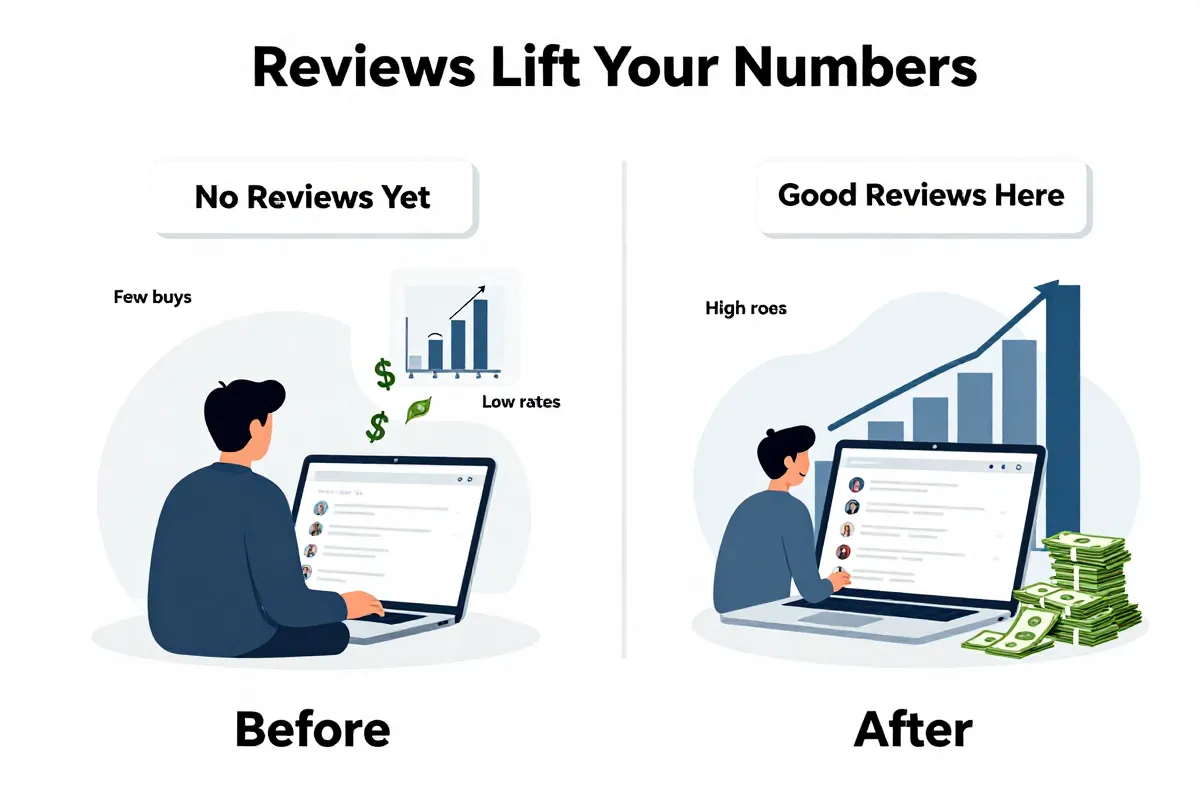
Authentic testimonials aren't just feel-good stories; they're direct drivers of your bottom line. Data consistently proves that robust social proof significantly boosts your conversion rate optimization.
Consider this: the global average e-commerce conversion rate hovers around 1.65%. This number highlights how challenging it is to turn browsers into buyers.
Testimonials bridge this gap by lowering perceived risk. They offer tangible evidence that your product delivers.
Products showcasing 11-30 reviews, for instance, see approximately 68% higher conversion rates. This isn't coincidence; it's a testament to collective trust. Recent data confirms how the volume of reviews correlates to conversion performance.
This uplift means you convert more visitors from the same traffic. Which directly impacts your customer acquisition cost (CAC).
Lower CAC is crucial for sustainable growth. When prospects trust you immediately, fewer marketing touchpoints are needed to convince them.
Ultimately, this translates into a powerful ROI of social proof. Investing in genuine customer stories isn't a luxury; it's a strategic move that pays dividends, making your marketing efforts work harder. You'll see direct impact on sales.
Comparing the impact of different testimonial formats
Different testimonial formats profoundly influence consumer psychology and buying decisions. While simple written quotes offer foundational trust, richer formats like video and case studies forge significantly deeper emotional connections and build stronger credibility.
Written reviews are your entry point. They provide quick validation, addressing immediate concerns about product quality or service reliability. These snippets function as essential trust signals during rapid browsing.
However, their impact often remains on the surface. They offer limited insight into the customer's full experience or the emotional journey involved.
Video testimonials elevate authenticity. Seeing and hearing a real person discuss their experience triggers empathy and builds a powerful, personal connection. This format combats skepticism far more effectively than text alone.
Many businesses still wonder about the tangible difference. The debate between video testimonials and written reviews is often decided by deeper psychological triggers. We consistently observe a stronger emotional resonance from video proof.
Case studies offer the ultimate deep dive. They detail specific challenges, solutions, and measurable outcomes. These formats speak directly to logical thinkers and those needing comprehensive proof points before committing.
Here’s how different formats compare:
| Testimonial Format | Core Psychological Impact | Key Strength | Best Use Case |
|---|---|---|---|
| Written Quotes | Quick validation, basic reassurance | Ease of consumption, high volume | Product pages, checkout, social media ads |
| Video Testimonials | Emotional connection, high authenticity | Trust, empathy, engagement | Homepages, landing pages, email campaigns |
| Case Studies | Logical proof, problem-solving trust | Detail, measurable results | B2B sales, high-ticket items, complex services |
You need to strategically deploy each format. Think about where your audience needs reassurance, emotional connection, or hard data.
How to collect authentic testimonials with Testimly
Collecting genuinely impactful testimonials becomes simple with a structured approach. We make the entire testimonial management process effortless for founders and marketers, streamlining how you gather social proof.
Here’s exactly how you can use our platform to start collecting testimonials today:
- Generate your unique link. Our platform creates a personalized branded link specifically for your business. This link is the direct pipeline for customers to share their feedback, whether through video, text, or image.
- Share at the right moment. Distribute this unique link immediately after a customer's positive interaction. This could be post-purchase, after a successful service, or following an excellent support experience. Timing is everything for capturing authentic enthusiasm.
- Approve and customize displays. Once testimonials arrive, you review and approve them within your dashboard. Then, choose from a suite of customizable widgets designed to match your brand's aesthetic. This ensures a seamless look across your site.
- Embed anywhere, no code needed. Display your new social proof across any website or CMS platform. Simply copy and paste a simple code snippet. No technical skills are required, making integration truly hassle-free.
This method transforms potential hesitations into undeniable proof. You're not just collecting reviews; you're building a vibrant library of real customer stories, ready to boost your credibility instantly. And this strategy works best when you act fast.
Common misconceptions about social proof
Many businesses mistakenly believe that accumulating a high volume of reviews, regardless of their origin, automatically boosts credibility. This is a significant pitfall. In reality, 100 fake reviews are far more damaging than five truly authentic ones.
Customers are savvy. They can spot inauthentic feedback, which immediately erodes trust in your brand. Search engines are also getting smarter, penalizing sites that use deceptive practices.
One genuine, heartfelt story from a real customer carries immense weight. It builds a deeper connection and provides social proof that resonates. Think quality over sheer numbers, always.
Another common misconception is that only overwhelmingly positive feedback serves your brand. You might think every review needs to be a perfect 5-star rating. Not true.
Occasionally including a mild critique or a balanced review actually enhances your overall authenticity. It shows transparency and demonstrates you're not hiding anything. Plus, potential customers find these reviews more relatable and believable.
A perfect score can sometimes feel too good to be true, triggering skepticism. A review that honestly addresses a minor issue, then highlights how your product or service still delivers immense value, builds far more trust. It proves your brand is real, and your customers are human.
True social proof isn't about perfection; it's about trustworthy transparency.
Focus on getting real stories, even if some aren't flawless. And ensure you encourage all types of honest feedback. You'll build a stronger, more resilient brand for it.
Why fake reviews destroy brand equity
Fake reviews don't just fail to build trust; they actively destroy your brand equity. Once customers or search engines detect inauthentic feedback, your credibility takes an immediate, irreversible hit.
Customers are sharper than ever. They quickly spot generic language or overly positive, vague statements. When they do, skepticism replaces trust, making your genuine reviews appear suspicious too.
This erosion directly violates Google’s E-E-A-T (Experience, Expertise, Authoritativeness, Trustworthiness) guidelines. Google prioritizes content and brands that demonstrate genuine value and reliability to users. Fake reviews signal the opposite.
Inauthenticity transforms social proof into a social liability.
Your brand credibility suffers significantly. It's not just about losing a potential sale; it's about damaging your reputation in the long term. Rebuilding lost trust takes immense effort, often years.
You risk penalties from search engines for deceptive practices. More importantly, you lose the genuine connection with your audience. People want to buy from real businesses, validated by real people.
Where to place testimonials for the best results
Effective testimonial placement isn't a guessing game; it's a strategic move in conversion rate optimization. You need to position genuine customer stories where they directly impact purchasing decisions, alleviate doubts, and build immediate trust. Think of testimonials as silent sales agents, working tirelessly across your site.
Placement determines impact. Don't just scatter them. Pinpoint the critical moments in your customer's journey when a third-party endorsement makes the biggest difference.
Homepage
Your homepage is your digital storefront. Place compelling testimonials near your main value proposition or hero section. This provides instant social proof the moment a visitor arrives. A quick, impactful quote or a short video testimonial establishes credibility from the first glance, making people stick around longer.
Product and Service Pages
Customers scrutinize product pages for proof that an item delivers on its promises. Embed relevant testimonials here, ideally near key features or pricing. This directly addresses skepticism and helps potential buyers visualize their own success with your offering. Specificity in these reviews matters most.
Landing Pages
For lead generation or specific campaign goals, a landing page needs to build trust fast. Integrate testimonials prominently on these pages to validate your offer. When visitors see others benefiting, their willingness to convert increases significantly. You're building confidence right where it counts.
Pricing Pages
The pricing page is a high-friction area. Placing testimonials here can alleviate price sensitivity by reinforcing value. Show customers raving about the return on investment or the exceptional quality they received for their money. This helps justify your pricing structure.
About Us / Team Pages
People connect with people. On your About Us or team pages, authentic testimonials humanize your brand. Show customers expressing their positive experiences with your support team or the overall company mission. It builds an emotional connection that goes beyond just features.
Dedicated Testimonial Page
While contextual placement is key, a dedicated testimonial page acts as a comprehensive hub. Here, you can showcase a wider range of stories, case studies, and even video interviews. It’s a resource for deeper exploration and a powerful tool for optimizing the placement of your social proof for maximum ROI.
Marketing Materials & Email Campaigns
Your social proof extends beyond the website. Include powerful quotes in your email marketing, ad creatives, and sales presentations. This extends your message's credibility and nurtures leads, showing consistent value across all touchpoints.
You should always test different placements and formats. What works for one audience might not resonate with another. Monitor your conversion metrics closely after each change.
High friction points like checkout pages
Testimonials placed on checkout pages directly combat last-minute anxieties that often lead to abandoned carts. At this crucial stage, potential buyers look for reassurance.
They want to know others have successfully navigated the purchase and are happy with their decision. This immediate validation is a powerful friction reduction strategy.
It minimizes hesitation right before they click "buy." You're giving them that final, human push of confidence.
Seeing positive feedback makes completing the purchase feel like a good move, (it’s a quick mental check). This significantly lowers cart abandonment rates.
Homepage hero sections for instant credibility
Showcasing social proof in your homepage hero section instantly signals that your business is established and trustworthy. This prime location, often called "above the fold," is the very first thing visitors see upon landing on your site.
You capture their attention immediately. This initial exposure quickly builds confidence and provides critical social validation.
When potential customers arrive, they're often skeptical. Seeing others endorse your product or service right away reduces this early hesitation.
It helps them decide to explore further, rather than bouncing off to a competitor. Think of it as a quick mental nod: "Okay, others trust this."
This immediate credibility makes your business appear more legitimate. It sets a positive tone for their entire visit.
Your homepage hero isn't just a banner. It’s your first and strongest opportunity to make a lasting, trustworthy impression.
Frequently asked questions about testimonials
How frequently should I update my testimonials?
Freshness and relevance demand regular updates to your customer feedback. Stale testimonials, even if positive, can make your brand seem inactive or outdated to new visitors. They want to see recent proof.
Aim to add new testimonials every 1-3 months, depending on your sales volume. This consistent flow signals an active, thriving business.
It also demonstrates ongoing customer satisfaction with your current offerings. (Your product might have evolved since that 2020 testimonial.)
Regular updates ensure your social proof remains a powerful, current conversion tool. We help you set up automatic collection prompts for this exact purpose.
Can testimonials boost my SEO?
Yes, testimonials can indirectly improve your search engine optimization (SEO). While Google doesn't directly rank pages based on the number of testimonials, they contribute in several key ways.
They often include relevant keywords naturally, improving content relevance for user queries. This user-generated content shows genuine engagement.
High-quality testimonials also increase dwell time on your pages. When visitors spend more time reading positive feedback, it signals to search engines that your content is valuable.
Using schema markup for testimonials can help search engines display star ratings or review snippets in search results. This boosts click-through rates.
What makes a testimonial truly impactful?
Truly impactful testimonials are specific, authentic, and highlight tangible results. Vague praise like "Great product!" falls flat. Your audience needs details.
Look for stories that describe a customer's specific problem and how your product or service provided a clear, measurable solution. How did their life or business improve?
Authenticity is non-negotiable. Real names, job titles, photos, or even video clips build immediate trust. (And we make it easy to collect these).
A strong testimonial doesn't just praise; it paints a picture of transformation.
How many testimonials do I actually need?
There’s no magic number, but focus on quality and a diverse set of testimonials. A single, powerful video testimonial can outweigh dozens of generic text quotes.
For core product or service pages, having at least 3-5 strong, relevant testimonials is a good starting point. This provides enough social proof without overwhelming the reader.
As your business grows, aim for variety across different customer segments or use cases. This helps potential buyers see themselves reflected in your feedback.
You don't need hundreds of testimonials right away. Start with compelling ones and grow your collection consistently.
The next step to amplifying your brand's trust?
Now that you understand the power of authentic feedback, it's time to put it into action. Go review your current testimonial collection. See where you can add more specificity.
Then, actively seek out new customer feedback that directly addresses common objections or highlights key benefits. We make this process seamless.
Are short testimonials better than long ones?
The effectiveness of a testimonial isn't about its length, but its impact and specificity. A short, powerful quote can resonate far more deeply than a long, rambling narrative.
You need feedback that highlights tangible results. Think "This saved me 10 hours a week!" instead of "It was great."
Customers want to see specific outcomes. A concise statement describing a problem solved or a measurable benefit achieved offers instant credibility.
Vague praise, regardless of testimonial length, often gets overlooked. It lacks the detail necessary to connect with potential buyers.
Focus on collecting specific feedback that directly addresses a pain point or showcases a unique advantage. Even a few words, when precise, make all the difference.
How do I handle negative testimonials?
Negative testimonials are an inevitable part of doing business, and handling them correctly actually builds stronger trust than a flawless 5-star profile. You should treat every negative comment as a direct opportunity for reputation management.
Your response strategy matters more than the review itself.
A perfectly polished, all 5-star profile can sometimes feel fake. Humans understand that things go wrong. Showing how your business handles those challenges builds immense credibility.
It proves you stand by your customers, even when mistakes happen. This authenticity becomes a powerful form of social proof, demonstrating your commitment to customer experience. And that's priceless.
Do testimonials work for B2B companies?
Absolutely, testimonials are critically important for B2B companies. B2B buyers navigate a landscape rife with significant investments and professional stakes, making social proof an indispensable tool for building confidence.
These decisions are rarely impulsive. Purchasing software, services, or equipment for a business involves substantial financial commitments and often impacts an entire team's workflow.
B2B buyers face considerable risk aversion. They aren't just spending their own money; they're deploying company capital and putting their professional reputation on the line.
A wrong choice can lead to wasted budget, operational disruptions, or even career setbacks. Because of this, they look for external validation more intensely than typical B2C consumers.
Testimonials provide tangible proof that your solution delivers on its promises. They offer assurance that other businesses, often similar to their own, have successfully implemented your product.
This validation reduces perceived risk significantly. It confirms the investment is sound, and the decision-maker won't be seen as making a poor choice.
Effective B2B marketing hinges on trust and credibility. Client success stories and case studies, which are essentially long-form testimonials, show real-world impact and ROI.
They demonstrate how your offering solves complex business problems, rather than just listing features. This deep dive into a client's journey is exactly what skeptical B2B buyers need.
These detailed endorsements act as powerful peer recommendations. They affirm that your company is a reliable, high-performing partner, not just another vendor.
Is AI-generated content okay for reviews?
AI-generated content is a definitive no for customer reviews. While powerful for many marketing tasks, using AI to craft the 'voice' of a customer directly undermines the very foundation of social proof.
Human readers are remarkably adept at detecting inauthenticity. An AI-generated review often lacks the specific, sometimes imperfect, details, emotional nuances, and unique phrasing that makes a human testimonial believable.
It's like comparing a carefully sculpted replica to the real thing; one feels authentic, the other just feels off. This immediately erodes content authenticity.
Using AI for reviews gambles with your brand's most valuable asset: trust. When a potential customer senses a review isn't genuine, it doesn't just discredit that single review. It casts doubt on all your testimonials and, by extension, your brand's integrity.
Your AI in marketing strategy should never extend to faking customer experiences. The goal of a testimonial is to share a genuine success story, not a generic, algorithm-produced script.
We focus entirely on helping businesses capture real, unvarnished customer feedback. Because that's what truly resonates. Don't risk your credibility for a shortcut that backfires.
Collect testimonials in minutes
The easiest way to get video and text reviews from your customers. Start for free and build trust instantly.