How to Get Customer Reviews: 7 Proven Strategies
People often ask if traditional marketing still holds up. But they're missing the point. The bigger question for most businesses today isn't about marketing spend; it's about a fundamental trust deficit.
Our research shows 91% of consumers read online reviews before making any purchase. Not a few people. Almost everyone. And 84% trust those reviews as much as a personal recommendation from a friend. Think about that impact.
Without current, positive reviews, your business is invisible to a massive chunk of your potential market. You're losing sales before you even know they existed. This isn't just about 'feedback'; it's your primary conversion engine.
Studies show adding just three lines of testimonials to a landing page can increase conversions by 34%. That's a huge lift. For more specific strategies, see 10 Proven Ways To Boost Website Conversions With Customer Testimonials. Reviews also directly impact your local SEO ranking, pushing you higher in search results on platforms like Google. Critical visibility. They are digital word-of-mouth, working 24/7 to build your brand while you sleep. Your silent sales team. A business without reviews in 2026 is like a shop with no signage.
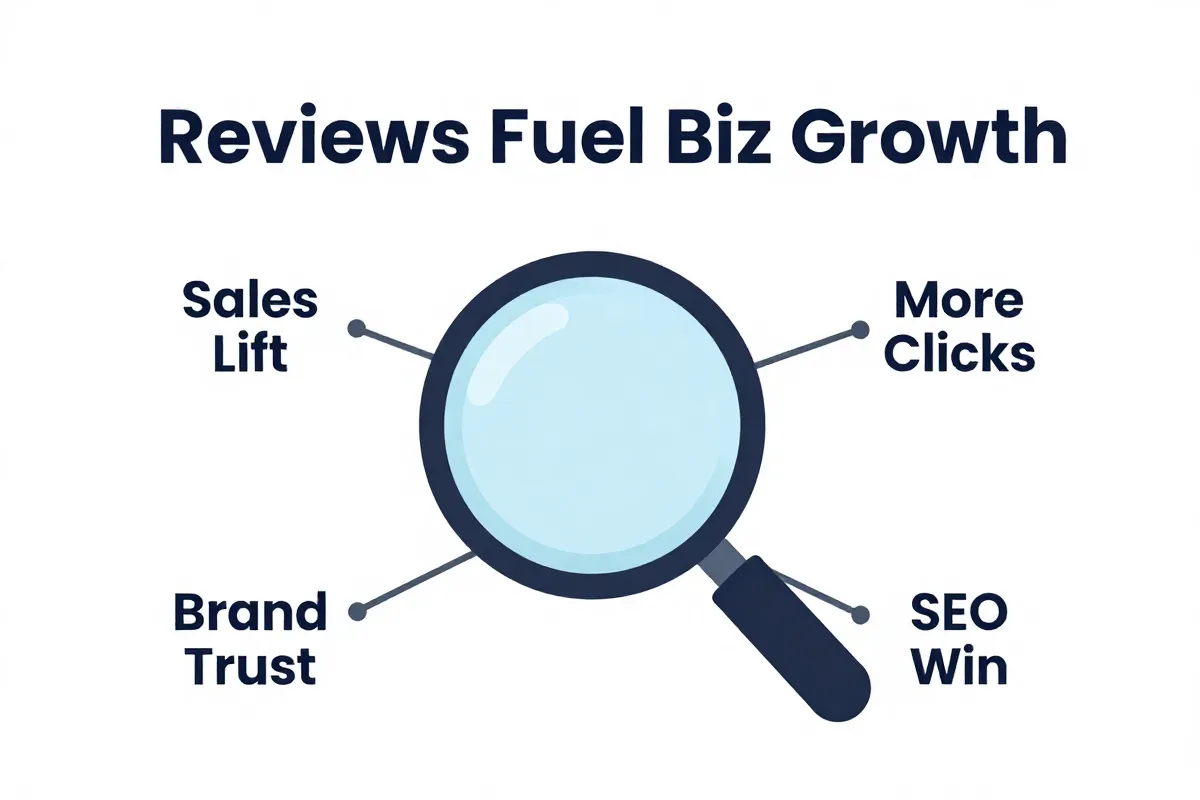
Why customer reviews are a growth engine for your business
Reviews aren't just about vanity; they're the fuel igniting your business's growth. The psychology here is simple: people trust people. And increasingly, they trust the opinions of strangers online almost as much as their friends.
Adding just three lines of testimonials can boost conversions by 34%. Why? Because potential customers see themselves in those stories. They see proof that your product or service delivers on its promises. According to statistics on how reviews directly influence the purchase decisions of modern consumers, modern consumers want social proof, they want to see evidence. This report highlights just how critical it is to have reviews available for potential buyers.
But it's not just about volume; it's about timing and impact. The Darla Moore School of Business found that the very first review can set the tone for the next three years. This is known as the "First-Review Effect." A negative first review can tank your product even if later reviews are glowing.
And that's a hill to climb.
So, actively manage your review pipeline. Don't wait for feedback to trickle in randomly. Be proactive. (We can help with that. More later.) Make it dead simple for your customers to leave reviews. Otherwise, you're leaving your growth to chance.
Want to proactively gather more reviews? See our guide on How To Ask For Reviews for proven strategies.
Where to focus your review collection efforts
Google isn't the only game in town. Focusing your review collection efforts across multiple platforms gives you broader visibility and credibility.
Here's a breakdown of where to concentrate your energy:
- Google Business Profile: A must-have. Google dominates search, and positive reviews directly impact your local SEO. This is non-negotiable in 2026.
- Yelp: Think of Yelp as the place where customers go to complain, or celebrate. While Google may drive more traffic, Yelp often hosts more in-depth (and sometimes harsher) reviews. Managing your presence here is crucial, especially for businesses in the service industry.
- Trustpilot: A strong choice for building overall trust and brand reputation. It's a general review platform, making it suitable for a wide range of businesses. And it lets you showcase reviews directly on your website.
- Industry-Specific Platforms: Don't overlook these. For software, that's G2 or Capterra. For home services, it's Houzz or Angi. These platforms cater to specific audiences, giving you highly relevant feedback and exposure. (For example, ignoring Houzz as a home remodeler is business malpractice.)
The dynamic between Yelp and Google is critical. Google owns the search results, but Yelp owns the detailed reviews. Users frequently check both. Neglecting either means you're missing a big piece of the puzzle.
It's also important to consider the "First-Review Effect:" so make a strong first impression.
When is the right time to ask for a review?
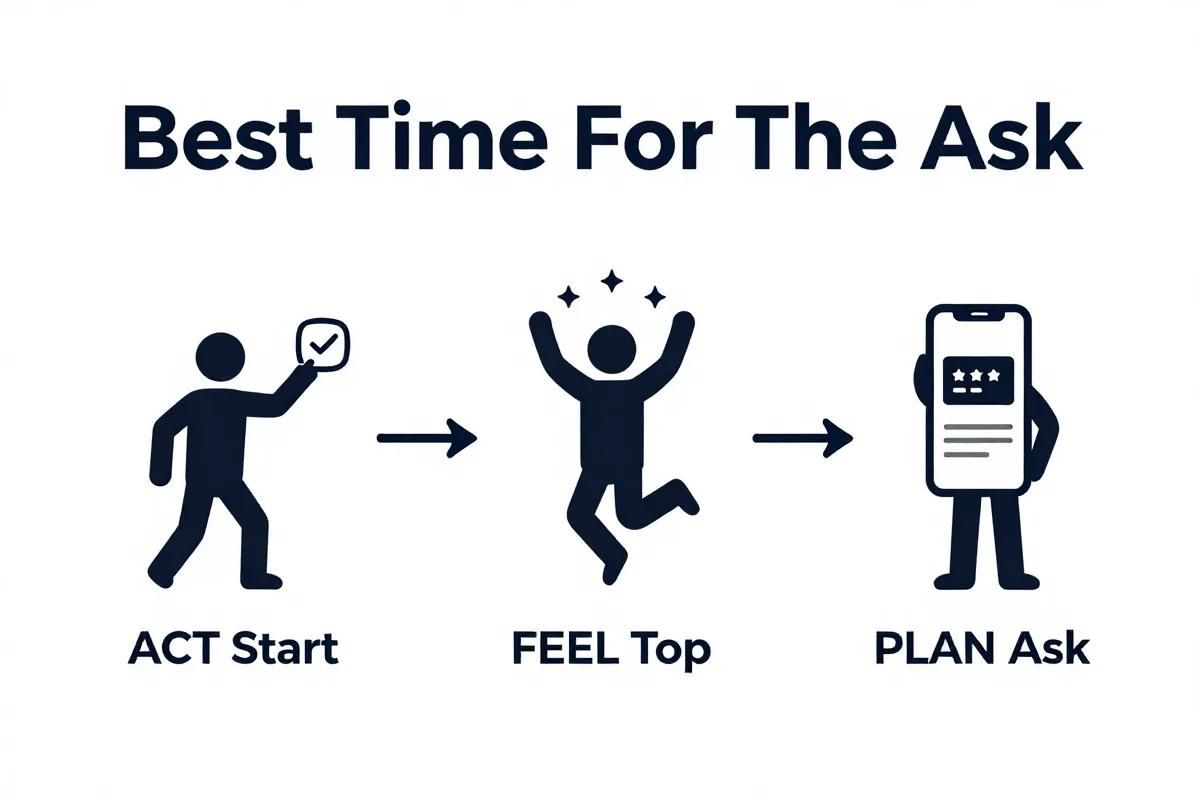
Asking for a review at the wrong moment is like proposing on a first date; the timing kills the chances. Aim for the peak excitement in the customer journey.
Think of it this way: Hit them when they're feeling the love, not when they're still figuring things out. Requesting feedback too early, before they've fully experienced your product, leads to generic, unenthusiastic responses. And waiting too long? They've already moved on.
The sweet spot lies in identifying key customer milestones.
These milestones act as perfect triggers:
- Post-Purchase Satisfaction: Immediately after a successful purchase.
- Successful Onboarding: Once they've set up their account or completed initial training.
- Feature Adoption: After they've actively used a key feature of your product.
- Support Interaction: Following a positive interaction with your support team.
Optimal timing drastically impacts response rates. A happy customer, fresh off a positive experience, is far more likely to leave a glowing review than someone you catch at random. The goal isn’t just to get reviews; it’s to get positive reviews that drive conversions. And remember that 95% of incentivized reviews are rated 4 or 5, compared to only 70% of organic reviews are positive for exactly the same product.
Timing isn't everything, but it's close.
The best moments for service-based businesses
The best time to ask for a review in the service industry? Immediately after project completion.
For agencies or contractors, the sign-off moment is your golden window. Client satisfaction is at its peak. Capitalize. Don't let that positive energy dissipate.
But how soon is too soon?
Aim for within 24-48 hours of project completion. This keeps the experience fresh in their mind. Plus, you're demonstrating you value their feedback.
- A quick follow-up email works wonders.
- Personalized messages show you care.
- Make the review process as painless as possible.
The key is to strike while the iron is hot.
And speaking of timing, did you know that the first review a product receives can heavily influence its future reviews for up to three years? Get that positive feedback rolling early.
How about automating the follow-up? We built our platform, Testimly, specifically to trigger review requests based on project milestones. We make it dead simple to automate that process.
This fails, however, if your initial client onboarding was a nightmare. Fix that first.
The best moments for e-commerce and product brands
For e-commerce, it's all about nailing the unboxing experience. Don't sleep on the emotional high that comes with a fresh delivery.
Here's how to time your review request perfectly:
- Product Delivery + 7-14 Days: Give your customers time to receive, unpack, and actually use their new purchase. Seven days is ideal for simple products; bump it to fourteen if it's something complex that requires a learning curve.
- Post-Purchase Email: Automate a follow-up email that goes out precisely 7-14 days after the delivery date. Personalize this email! Reference their specific purchase to show you pay attention.
- Incentivize (Strategically): Offer a small discount on their next purchase in exchange for a review. Don't overdo it; a gentle nudge is all you need. Remember that 95% of incentivized reviews are rated 4 or 5, compared to only 70% of organic reviews being positive.
- Make It Easy: Include a direct link to the review platform in your email (Google, Trustpilot, etc.). The fewer clicks, the better.
The bigger issue is user expectations. If your product is late or damaged, a review request is the last thing they want. Ensure your product delivery and packaging are on point first. Otherwise, you risk triggering negative reviews.
Also, it’s critical to avoid seeming generic. Instead of saying, "Tell us about your experience," ask a specific question. For instance, "How did [Product Name] solve [Problem] for you?"

How to craft the perfect review request email
Your review request email is your chance to shine. Don't waste it with generic, impersonal messages.
Here's the formula:
- Personalize the Subject Line: "We'd love your feedback on [Product Name]" is better than "Leave us a review!"
- Reference the Purchase: Remind them what they bought, and when. This jogs their memory and shows you care. "Thanks for your recent purchase of the [Product Name] on [Date]."
- Explain Why Their Feedback Matters: Don't just say you want a review; explain how their feedback helps other customers. "Your review will help other shoppers decide if [Product Name] is right for them."
- Keep it Short and Sweet: No one wants to read a novel. Get to the point.
- Provide a Direct Link: Make it dead simple for them to leave a review. Link directly to your Google Business Profile, Trustpilot, or industry-specific review site.
- Offer a Small Incentive (Optional): A discount code or free shipping on their next purchase can boost response rates.
- Mobile-Friendly Design: Ensure your email looks great on all devices. Over 70% of customers report that they check reviews before making a purchase decision, and many do this on their phones.
But avoid sounding desperate. A pushy, aggressive email will turn customers off. Keep it friendly, appreciative, and concise. Make the email feel like a natural extension of the buying experience.
Remember, authentic customer videos can drive growth, so you might consider encouraging customers to submit video reviews as well.
Also, don't forget to monitor those reviews. Testimly is designed to do just that. We'll send you alerts whenever a new review comes in. You can quickly respond, thank the customer, and address any concerns. (We built that alert feature after missing a few critical reviews ourselves.)
Now, let’s look at how to make the review process easy as pie for your customers.
How to ask for reviews without sounding desperate
Asking for reviews the right way makes all the difference. Nobody wants another generic "Please review us!" email clogging their inbox.
The trick? Personalize it. Here’s how:
- Segment your audience: Target requests based on purchase history or customer type. If they bought Product X, mention Product X in the email. Obvious? Maybe, but 80% of review requests feel automated.
- Highlight the Impact: Explain exactly how their feedback helps you. Be transparent. "Your review helps us improve our product development," is better than "We value your opinion." (Even better: Tell them what you’re developing.)
- Don't Be Afraid to Show Some Personality: Ditch the corporate speak. Write like a human. A little humor goes a long way.
- Go Beyond Text: Explore video testimonials. Authentic video content can drive significantly higher engagement than text alone, giving potential customers a genuine look into the experiences of others.
But what about automation? Can you personalize at scale?
Yes, but it takes work.
Use dynamic content to insert customer names, product details, and personalized greetings. A/B test different email templates to see what resonates best with your audience. Also, you might consider encouraging customers to submit video reviews as well. It's about balancing efficiency with authenticity.
And for those who really want to connect with customers and automate the review-gathering process, consider using Testimly to collect and showcase video testimonials, helping make the review process engaging and authentic.
Ways to ask that actually get a response
The channel you use to ask for reviews dramatically affects your response rate. It's not enough to just ask; you need to ask where your customers are most receptive.
Consider these options:
- Email: Perfect for in-depth storytelling and providing context. You can use email templates to personalize your message and explain why their feedback is valuable.
- SMS: Boasts higher open rates (around 98% compared to email's average of 20%), making it ideal for quick reminders. But, you're limited in how much detail you can provide.
- QR Codes on Packaging: Great for physical products. Customers can scan the code and immediately leave a review.
SMS marketing's immediacy makes it powerful. People check texts almost instantly. But email allows you to build a narrative. To explain the "why" behind your request. QR codes are convenient, but rely on the customer being motivated enough to scan.
The bigger issue? Spam filters. Email marketing requires careful list management. Otherwise, you risk landing in the junk folder, rendering your efforts useless.
A/B test your approach. See which channel yields the best results for your specific customer base.
And did you know that positive customer reviews build trust in your brand and convert more people into customers? Don't leave them on the table.
Once you’ve gathered those precious reviews, be sure to make the most of them. Adding testimonials to key pages can increase conversion rates. Check out these 10 Proven Ways To Boost Website Conversions With Customer Testimonials.
Now, let’s talk incentives.
The truth about incentivized reviews and brand loyalty
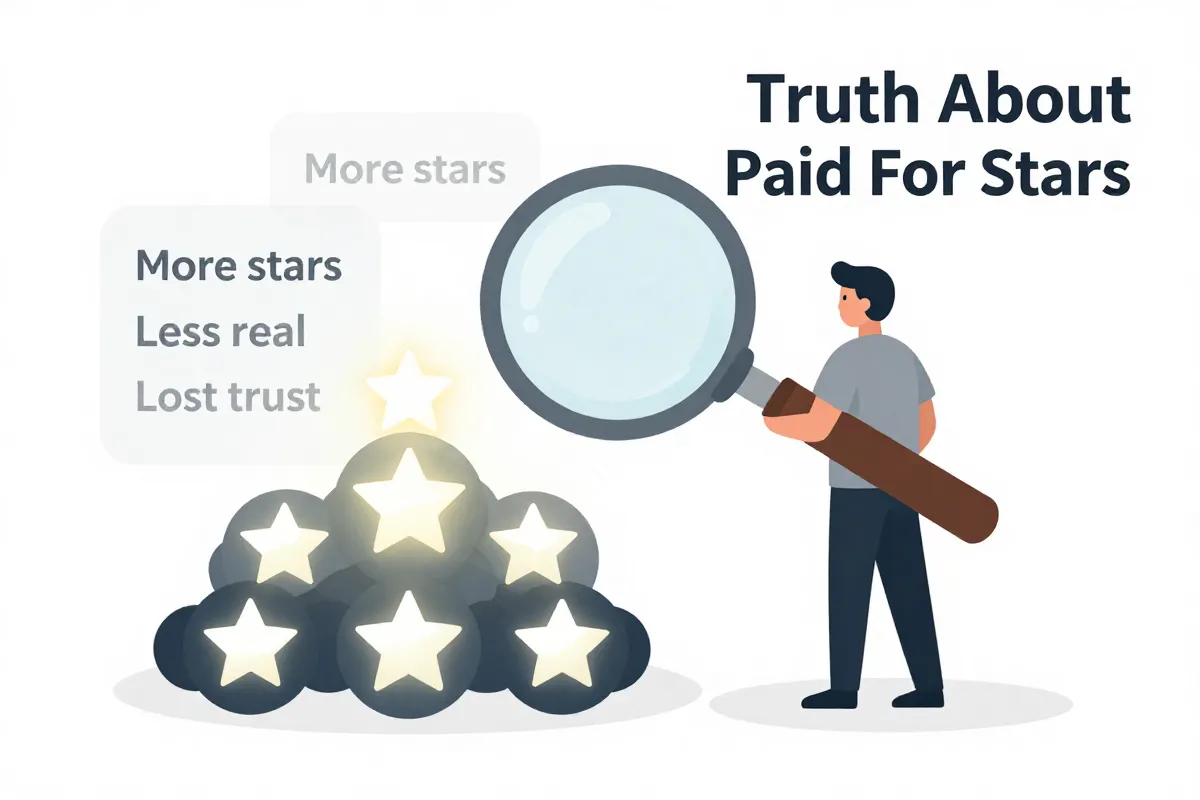
Incentivized reviews can inflate your star rating, but at a cost. The Darla Moore School of Business discovered that 95% of incentivized reviews are rated 4 or 5, while only 70% of organic reviews hit that mark for the same product. The sentiment might be compromised, however.
Think of it as review inflation. Sure, you get more reviews. But are they truly representative of the average customer experience? Offering discounts or gift cards can skew the feedback, creating a false impression of your brand. And that can backfire.
The core problem? Trust. Customers are savvier than you think. They can often spot a mile-away an inauthentic review. If your reviews sound suspiciously similar or too glowing, potential buyers will get suspicious. That erodes brand loyalty. And that's the opposite of what you're trying to achieve.
There are also ethical considerations. The FTC has guidelines about transparency when it comes to incentivized reviews. You must disclose that the reviewer received something in exchange for their feedback. Not doing so is deceptive, potentially exposing you to legal trouble. (And trust me, the FTC isn't known for its sense of humor.)
So, tread carefully. Incentives can be a useful tool, but only if used responsibly. Otherwise, you risk sacrificing long-term brand loyalty for a short-term boost in ratings. Want to proactively gather more reviews? See our guide on How To Ask For Reviews for proven strategies.
What can we do next? Let's discuss how to handle negative reviews (because they're unavoidable).
Compliance rules you must follow
Compliance rules are key; failing to follow platform guidelines can tank your review strategy. Yelp, for instance, explicitly prohibits asking for reviews. And they're serious about it.
Google, on the other hand, allows you to solicit reviews but forbids "review gating." What's that?
It's a deceptive practice where you only ask happy customers for reviews, filtering out anyone who might leave negative feedback. Don't do this. It’s not only unethical, but Google's algorithm can detect it.
- This violates Google's guidelines.
- It creates a skewed and unrealistic view of your business.
- It leads to distrust from potential customers.
Legal compliance is crucial, but fair play builds trust.
What to do when you get a bad review
A bad review isn't a business death sentence; it's a chance to prove your mettle. Think of it as public customer service in hyperdrive.
Here's how to turn that frown upside down:
- Stay Calm: Resist the urge to fire back an angry retort. Take a deep breath (or ten) before responding. An emotional response escalates the situation.
- Acknowledge: Show you're listening. Thank the reviewer for their feedback, even if it stings. "We appreciate you taking the time to share your experience," goes a long way.
- Empathize: Put yourself in their shoes. Understand their frustration. "We're sorry to hear you had a negative experience with [Product/Service]."
- Offer a Solution: Don't just apologize; offer to fix the problem. "We'd like to make things right. Please contact us directly at [Email/Phone] so we can resolve this issue."
- Take it Offline: Move the conversation off the public forum. Exchange emails or have a phone call. This allows for a more personalized and productive discussion.
The goal? Show you care more about your customers than your ego.
And here's the thing most businesses miss: A well-handled negative review builds more trust than a sea of perfect 5-star ratings. It shows you're human. You make mistakes. But you also take responsibility and strive to improve. Customers appreciate that transparency. People are more likely to trust a company that acknowledges its flaws and actively works to correct them.
But, don't get complacent. Remember that 91% of consumers read online reviews before making a purchase. And if all you have are negative reviews, you're in trouble. It's time to proactively gather some positive feedback.
How to handle fake or malicious reviews
A fake review is usually pretty obvious. Watch for vague language, generic names, and a sudden surge of reviews (especially negative ones).
Here's how to fight back:
- Flag It: Most platforms (Google, Yelp) have a "report" or "flag" option. Use it. Provide clear evidence why the review violates their guidelines (spam, defamation, etc.).
- Respond (Carefully): Acknowledge the review publicly, but don't get into a back-and-forth. State that you believe it's fake and have reported it. Keep it professional.
- Gather Evidence: Screenshot the review, note the date/time, and collect any information that supports your claim (e.g., the reviewer never purchased from you). This helps when reporting reviews.
Google and Yelp will investigate, but don't expect instant results. Their review processes take time. And sometimes, they side with the reviewer.
The bigger issue? Defamation.
If a review contains outright lies that damage your business, consider legal action. Document everything. Consult with a lawyer specializing in online reputation management. (This isn't cheap, but can be worth it if the damage is significant). But before you call your lawyer, remember that 91% of consumers read online reviews before making a purchase. Is this one bad review really worth the legal fees and the potential for even more negative attention?
Finally, a sudden influx of negative reviews might signal a competitor attack. If you suspect foul play, contact the platform's support team immediately. Provide as much evidence as possible. They may be able to identify and remove the spam reviews. The other option is to follow the steps that Testimly recommends for requesting reviews.
Next, let’s cover how to showcase those hard-earned reviews to maximize their impact.
Managing your reviews in the age of AI
Managing reviews today means battling both real and fake feedback. The rise of AI-generated fake reviews is now a serious problem, but platforms are starting to fight back. They're using machine learning to spot patterns, like suspiciously similar language or sudden spikes in reviews from unverified accounts.
But AI isn’t all bad news.
Here's how you can flip the script:
- Use sentiment analysis. Plug hundreds (or thousands) of your reviews into an AI-powered tool. The AI flags common positive and negative themes. (Caveat: some tools struggle with sarcasm.)
- Identify pain points. Machine learning algorithms sift through the reviews, highlighting recurring complaints about product flaws, shipping delays, or customer service snafus. You can then focus your team on fixing those specific issues, instead of guessing.
- Track trends over time. Use AI to monitor how customer sentiment changes after implementing a new product feature or policy change. Did it move the needle? The data doesn't lie.
The catch? Many sentiment analysis tools are expensive or require a degree in data science to operate. And free tools? They often mangle the data. (Trust me, I've been there).
Also, while many businesses may be tempted to use AI to respond to reviews (especially negative ones), proceed with extreme caution! A canned, AI-generated response usually sounds, well, canned. Stick to a human touch for now. The future of reviews will depend on finding that balance.
Next up, we’ll delve into how to showcase those hard-earned reviews to maximize their impact.
Frequently asked questions about business reviews
It's a common myth that you need a perfect 5-star rating to attract customers. In reality, a rating between 4.2 and 4.5 often builds more trust.
Why?
Because it signals authenticity.
Customers are wary of perfection. They assume something's fishy if every single review is glowing. A few minor flaws make your business seem more human, and therefore, more trustworthy. The key is how you handle those less-than-perfect reviews.
Another frequent question: Should you delete negative reviews?
The short answer is usually no. Deleting a review is almost always impossible unless it violates the platform's guidelines (spam, hate speech, etc.). And even if you could, it's usually a bad idea. It looks suspicious.
- Customers will notice the missing review.
- It suggests you're hiding something.
- It invites even more scrutiny.
Instead, address negative reviews head-on. Show that you're listening and that you're committed to resolving the issue. This turns a potential negative into a positive. Which brings us to our final question: How many reviews do you need to see an SEO boost? There's no magic number.
The truth? It varies. It depends on your industry, your location, and your competition. A good rule of thumb is to aim for at least 10-15 reviews on Google Business Profile. But quantity isn't everything. Quality and consistency matter more. Regularly updated, positive reviews signal to Google that your business is active and relevant. And remember that 91% of consumers read online reviews before making a purchase. They want social proof, and they want to see that others have had positive experiences with your business.
Collect testimonials in minutes
The easiest way to get video and text reviews from your customers. Start for free and build trust instantly.