SaaS Testimonial Ideas to Boost Software Signups
I was looking at the conversion data for a dozen SaaS products last month and noticed something stark: the average conversion rate across B2B SaaS still hovers around 1.1%. But here's the kicker: a G2 survey from 2023 showed that 92.4% of B2B customers are more likely to purchase after reading a trusted review.
That’s a massive gap. It means simply having a testimonials page isn't enough in 2026. You can't just slap a few glowing quotes onto your site and expect signups to flood in.
Because the reality is, your competitors aren't just collecting reviews. They're turning those reviews into a proactive sales machine. They're scaling social proof.
Your strategy needs to move beyond static displays. It requires automation, thoughtful placement, and a constant, fresh flow of feedback. You need to leverage those powerful endorsements to actually convert. And that means rethinking how you gather and present customer stories.
Why social proof is the primary driver for SaaS growth
Social proof isn't just nice to have; it's the oxygen for SaaS growth. Given that 80% of SaaS landing pages already include some form of it, that's clearly not a secret.
But consider the average conversion rate for B2B SaaS companies sits stubbornly around 1.1% according to this 2026 study. The disconnect? Generic testimonials do little to sway skeptical buyers.
B2B buyers are hyper-rational. They need to see concrete benefits tied directly to their needs. This isn't about flashing logos; it's about demonstrating measurable value. The psychological impact is simple: reduce perceived risk.
- Show them others like them have succeeded.
- Quantify the results with hard data.
- Address their specific pain points directly.
And done right, your testimonials act as a silent sales team working 24/7. Now, it’s easy to passively wait for customer reviews, but we built our platform to help you collect testimonials proactively. This way, you’re not leaving those conversions to chance.
Manual vs automated collection methods
Manual outreach is a slow burn; automated collection is a wildfire. The biggest difference lies in scalability, especially if you're a niche SaaS trying to make noise.
With manual outreach, you're sending one-off emails, tracking responses in spreadsheets (shudder), and generally wrestling with a process that doesn't scale past a handful of testimonials per month. Forget about that. Automation, however, reduces friction at every stage.
- Automated Requests: Set triggers based on user milestones (e.g., after 90 days of active use).
- Multi-Channel Reach: Use email, SMS, and even in-app prompts.
- Workflow Automation: Auto-follow-ups based on response (or lack thereof).
But here’s a hard truth: manual testimonial collection is like herding cats. One of our clients, a dev tool company, saw a 300% increase in testimonial volume in the first month after switching to automated requests. You're no longer relying on sporadic goodwill; you're proactively building a pipeline.
The real advantage for niche SaaS businesses? Targeted, relevant testimonials that speak directly to a specific use case. Instead of generic praise, you get specific results, full attribution, relevant context, and a problem-solution narrative. (These are key for effective SaaS testimonials, by the way.)
Also, consider the time suck of manually formatting and publishing each testimonial. Our platform lets you turn those reviews into structured case studies, scaling social proof with automation. That’s less time spent copy/pasting and more time closing deals.
Ready to transform your customer stories into your most effective sales tool? Start proactively building your testimonial pipeline today. You can use our Testimonial Request Generator to get started.
Why manual outreach fails to scale
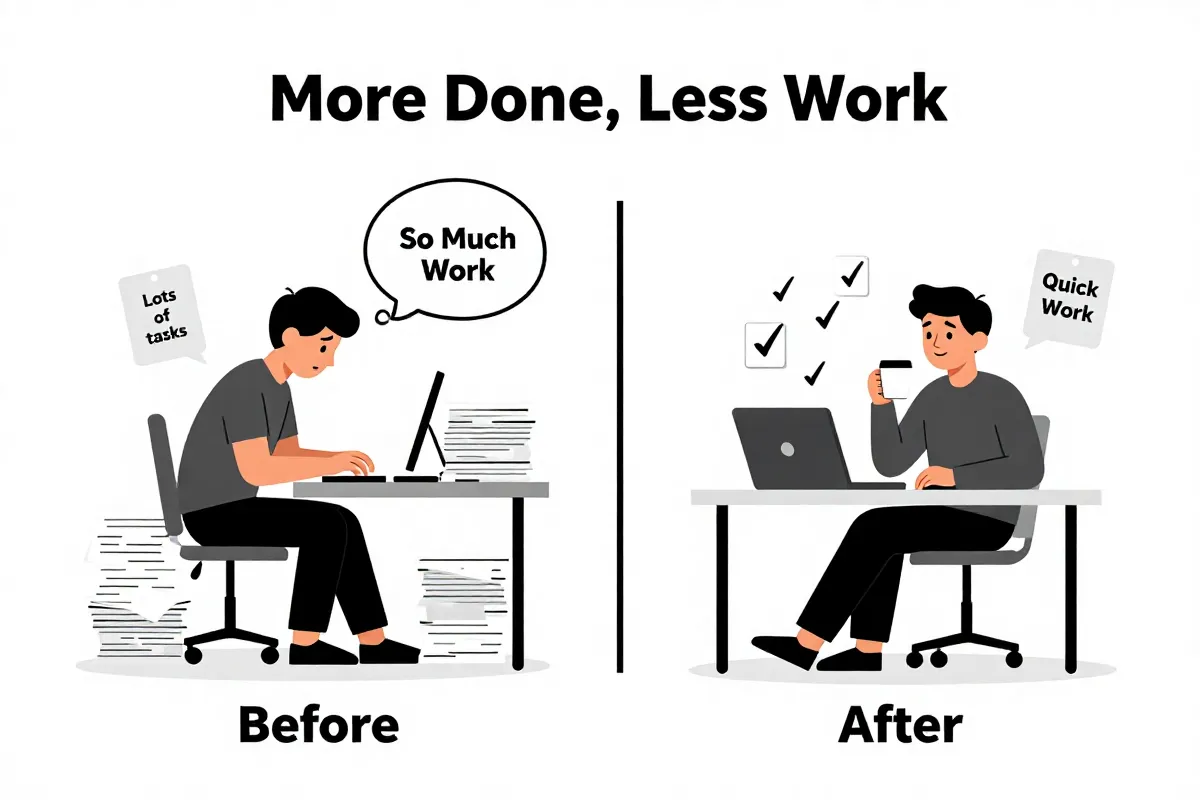
Manual outreach? Prepare for a time sink. The outreach friction alone can bleed hours from your week, especially if you're running a niche SaaS where manual requests often land in the digital abyss.
The core problem lies in wasted effort. You're not just sending emails; you're babysitting the process.
- Crafting personalized messages (because generic ones get ignored).
- Following up repeatedly (because people are busy).
- Chasing down approvals (legal, compliance, etc.).
For niche SaaS companies, the struggle is amplified. Response rates can be dismal, and even when you get a reply, you're often left with vague, unusable quotes that don't move the needle.
This fails because buyers want specifics. They want proof that your software delivers tangible results in their context. Generic testimonials don’t cut it. If you want to build trust, check out our guide on ways to boost website conversions with customer testimonials. And let’s face it: your time is better spent improving the product, not begging for testimonials. That's why we focused on building a solution to automate this whole process.
Benefits of automated video collection
With automated video collection, you ditch the scheduling headaches and time zone Tetris. The asynchronous nature means your customers can record video testimonials on their own time.
Think of it like this: no more coordinating calendars for live interviews. Send a link, and they record when they're ready.
Plus, tools like ours provide a branded recording experience. Customers don't need fancy equipment; they can record directly from their browser or phone.
Ideal video testimonials should be short and under 3 minutes long. According to AdSpyder.io (2026), that's the sweet spot for engagement. Respect your customers’ time, and viewers are far more likely to watch the entire testimonial. It's about delivering maximum impact in minimal time. Keep it concise, and you’ll keep their attention.
And speaking of engagement, be sure to leverage our guide to find out ways to boost website conversions with customer testimonials.
Next up, let's talk about how to get those testimonials published.
New formats that are working in 2026
Micro-testimonials and interactive testimonials are gaining traction because static text is flatlining. They give buyers a richer, more engaging experience than just reading another quote.
Micro-testimonials are short bursts of social proof – think 15-30 second videos or single-sentence endorsements. They're designed for snackable consumption, perfect for grabbing attention on social media or within a product demo.
Interactive testimonials, on the other hand, invite participation. Think quizzes, polls, or branching video experiences where users can explore different customer stories based on their specific needs.
But the biggest trend to watch is user-generated video.
- Authenticity jumps.
- Costs plummet.
- Engagement skyrockets.
This isn't about polished studio productions; it's about real users sharing their experiences in their own words (and from their own phones). And if you want to transform your customer stories into your most effective sales tool, start proactively building your testimonial pipeline today. You can use our Testimonial Request Generator to get started.
Interactive video reviews for landing pages
Interactive video reviews aren't just about watching; they're about doing. Clickable elements let users jump right into what matters most.
Think of it as turning your video testimonials into a choose-your-own-adventure. Instead of passively watching, viewers can click on links within the video to:
- Visit product pages directly.
- Explore relevant case studies.
- Sign up for a free trial.
It's about converting interest into action, instantly. And because testimonials can increase conversion rates, drive awareness, turn visitors into customers, and close more deals according to Senja.io (2026), make it easy for your visitors to convert.
This levels up landing page optimization by offering immediate paths to engagement. The goal is to reduce friction and guide potential customers down the funnel. It's not just a testimonial; it's an interactive sales tool.
Converting short quotes into case studies with AI
AI doesn't just collect testimonials; it crafts narratives. Think of it as turning customer snippets into fully realized case studies that speak directly to potential clients.
The core advantage of using AI lies in automation. AI can automate the process of turning customer testimonials into structured case studies, scaling social proof and speeding up time to publish, according to DNG.AI.
But here's where it gets interesting:
- Extract Key Insights: AI sifts through the testimonial, identifying the core problem, the solution offered, and the results achieved.
- Expand on the Narrative: It fleshes out the story with relevant details and context, turning a simple quote into a compelling case study.
- Structured Format: The AI ensures the case study follows a clear, logical structure, making it easy for readers to understand and relate to.
For instance, AI could take a 30-second video testimonial or even just a two-sentence quote and use it to generate a full-blown case study highlighting specific customer pain points. You’re essentially using AI to automate storytelling. You can then turn around and use our Testimonial Request Generator to collect more testimonials.
Questions that generate high-converting testimonials
Asking the right questions will get you testimonials that actually convert. Generic praise is nice, but specific results are what sway potential customers.
So, ditch the vague "Did you like our product?" Here are a few examples of what actually works:
- "What specific problem were you trying to solve before using our product?" This forces the customer to articulate their pain points.
- "How has our product improved your day-to-day workflow?" Think beyond just features and focus on real-world impact.
- "What measurable results have you achieved since using our product? (e.g., increased conversions, time saved, cost reductions)" Numbers speak louder than adjectives.
- "What would you tell someone who's considering using our product?" This often yields authentic, unscripted endorsements.
- "What's the single biggest reason you chose our product over the competition?" This highlights your unique value proposition.
Also, you can offer customers a few different formats for their answers (text, video, etc.). And if you're looking for ways to boost website conversions with customer testimonials, check out our blog post.
Questions about the before state
Here’s the secret sauce: probe their previous frustrations. Dig into the pain points that led them to start searching for a solution.
Think of it as unearthing the "before" picture to highlight the transformation your software provides. Don't just ask what they like about your product. Ask what they didn't like about the alternatives.
- "What were the biggest challenges you faced before finding our software?" Get them to articulate the specific obstacles they were trying to overcome.
- "What other solutions did you try, and why didn't they work for you?" This reveals the gaps in the market and helps you position your product as the superior choice.
- "What were your biggest concerns or hesitations before deciding to give our product a try?" Addressing these upfront builds trust and alleviates potential buyers' fears.
And remember, empathy sells. Make it clear you understand their pain, and you're far more likely to resonate with potential customers. If you want to make the process of collecting testimonials even easier, check out our Free Testimonial Review Generator.
Questions about measurable results
Quantifiable results are social proof on steroids. Potential customers need to see the direct ROI of your product in concrete terms.
So, how do you get customers to cough up the hard numbers? Ask pointed questions that force them to quantify their success.
- "How much time has our product saved you per week/month?" Time saved translates directly into cost savings and increased productivity. Frame this in terms of hours, not just vague feelings of efficiency.
- "What's the percentage increase in revenue you've seen since using our product?" This is gold. It demonstrates direct impact on their bottom line. (And remember: 92.4% of B2B customers are more likely to purchase after reading a trusted review.)
- "What specific costs have you reduced or eliminated by using our product?" Think beyond just monetary savings. What about reduced overhead, lower support costs, or fewer employee hours?
Don't settle for generalities. Dig deep into the metrics that matter to your target audience.
The bigger issue is, if you're not prompting for these numbers, you're missing out on the most compelling proof points. Plus, if you want to transform your customer stories into your most effective sales tool, start proactively building your testimonial pipeline today. You can use our Testimonial Request Generator to get started.
Questions that address common sales objections
Questions that address common sales objections get ahead of buyer concerns. Asking how the user felt about the price or the implementation process helps pre-handle objections for future buyers.
For instance, probe on these potential deal-breakers:
- "Did you have any concerns about the price point before purchasing, and how do you feel about the value now?" This surfaces perceived risks versus actual benefits.
- "How easy was it to get started with our software? Were there any hurdles in the onboarding experience?" This gives you a chance to address common complaints.
- "What surprised you most about our platform after you started using it?" This can unearth unexpected benefits that can be highlighted in future marketing.
If customers had zero friction, dig deeper. "If a friend asked you about [product], and had concerns about price/onboarding, what would you tell them?" Honest, relatable feedback is what overcomes objections.
But the bigger issue is, if you're not addressing concerns upfront, you're letting those objections fester. Take our platform for example, we strive to make this process no-hassle and customer-centric, with fair pricing and customer ownership.
Now you have those testimonials, let’s talk about where to put them.
Ethical and legal rules for SaaS founders
Ethical social proof is non-negotiable. It's not just about avoiding lawsuits; it's about building long-term trust with potential customers.
But here's the catch: many SaaS founders overlook the legal and ethical considerations when collecting and using testimonials. This can lead to serious repercussions, from damaged reputations to legal battles.
Obtaining Explicit Consent
Always get explicit consent before using any customer feedback as a testimonial. This isn't just a polite formality; it's a legal requirement in many jurisdictions.
And that consent needs to cover:
- How the testimonial will be used (e.g., on your website, in marketing materials).
- Whether the customer's name, company, and likeness will be displayed.
- The duration of usage (e.g., for a specific campaign or indefinitely).
Don't bury the consent request in your terms of service; make it a clear, separate step. Because customers need to actively opt-in, not passively agree. The GDPR, for example, imposes hefty fines for non-compliance (up to 4% of annual global turnover or €20 million, whichever is higher).
Avoiding Manipulation and Misrepresentation
Never twist or manipulate customer quotes to fit your narrative. Present testimonials accurately and in context. Ethical social proof relies on authenticity, not creative writing.
Because potential customers can spot a fake testimonial from a mile away. This can erode trust and damage your brand's credibility.
Here’s what to avoid:
- Taking quotes out of context.
- Exaggerating results or making false claims.
- Creating fake testimonials (duh).
Also, If you're editing a video testimonial, get the customer's approval on the final cut. This ensures they're comfortable with how their message is being presented.
Legal Considerations for Video Testimonials
Video testimonials add a layer of complexity due to image and voice rights. Make sure your consent agreement specifically covers the use of the customer's likeness in video format.
And, get a signed release form that grants you the right to use the video for commercial purposes. This protects you from potential lawsuits down the road. Because legal wrangling is the last thing you want when you are growing your SaaS.
And also consider data privacy laws. If the video testimonial features any personal data (e.g., customer's location or contact information), you need to comply with applicable regulations like the CCPA or GDPR. It's always better to err on the side of caution and anonymize any sensitive information.
Taking a moment to cover all of your legal bases can prevent future mishaps. Make it a habit to proactively collect testimonials with legal parameters in mind.
Rules for using brand logos and names
Even with a glowing testimonial, displaying a company's logo requires extra steps. Think of it as needing two separate permissions: one for the words, and one for the brand.
Logo usage rights fall under trademark law. So, while a customer might rave about your SaaS, that doesn't automatically grant you permission to slap their logo on your site.
- Explicit Approval: Always seek explicit approval to use a company's logo, even if they've provided a positive testimonial.
- Brand Guidelines: Adhere strictly to their brand guidelines regarding logo size, color, and placement. (Deviation can land you in hot water.)
- Written Agreement: Document the permission in writing, specifying the usage terms (e.g., website, marketing materials, duration).
The bigger issue? Assuming consent can lead to trademark infringement. Don't risk a legal headache over a seemingly small detail. And remember, you can always use our Testimonial Request Generator to get started.
How to measure the financial impact of testimonials
Measuring the financial impact of testimonials comes down to closing the ROI gap. Quantifying the lift they provide transforms testimonials from "nice-to-have" to revenue drivers.
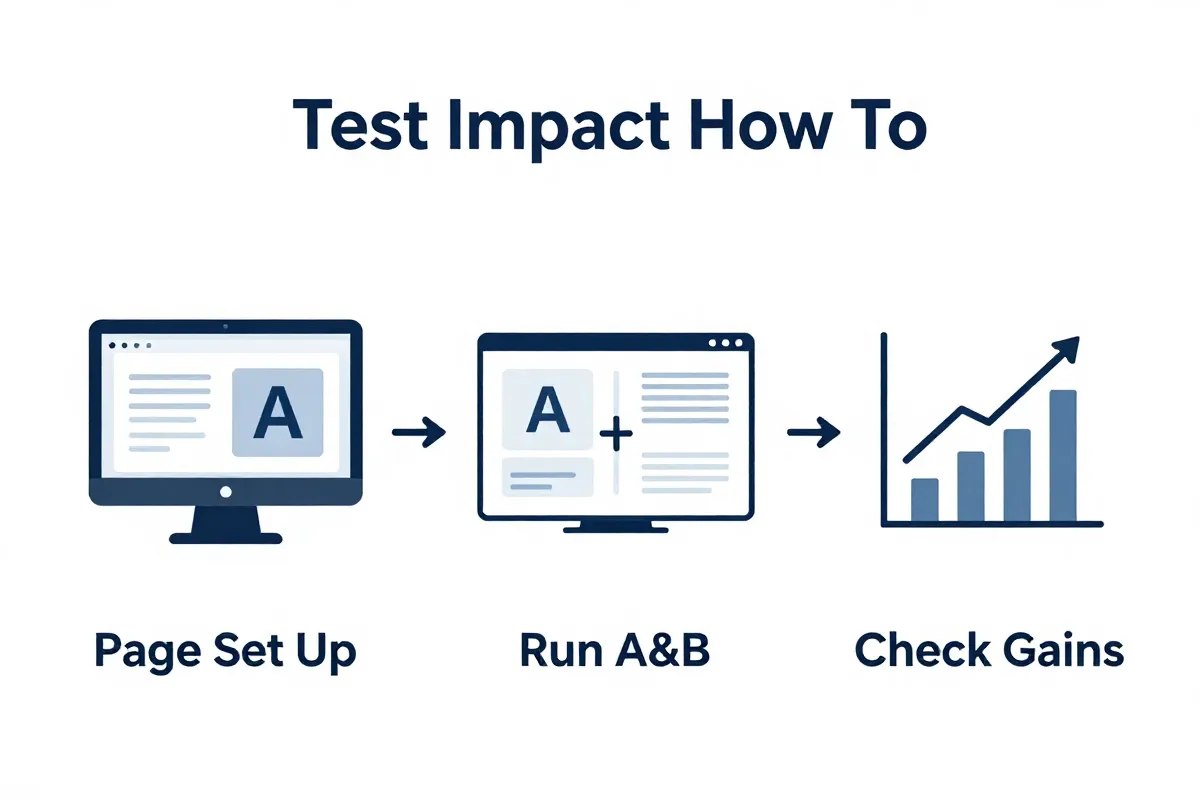
The key is tracking the conversion lift you get by adding testimonials to your landing pages. Do this by A/B testing versions with and without them.
- Create two identical landing pages.
- Add testimonials to one.
- Drive equal traffic to both.
Because A/B testing social proof is the only way to isolate its impact. Make sure you're testing a significant change: a complete absence vs. a compelling set of testimonials. A single, generic quote isn't enough.
Run the test for at least 2-4 weeks (or until you reach statistical significance). Don't just click save; check the log first because you want to ensure you’re measuring true conversions, not bot activity.
Now, analyze the data. Calculate the conversion rate for each page (e.g., signups, demo requests, purchases). The difference between the two is your conversion lift.
For example, if the page without testimonials converts at 1.1% (the B2B SaaS average) and the page with testimonials converts at 2.2%, your testimonials have generated a 100% lift.
And consider the longer-term impact through attribution modeling. If customers who interact with testimonials have a higher lifetime value or close faster, that’s another way to measure ROI.
Tracking attribution from testimonial clicks
UTM tracking is essential for seeing if testimonials actually drive signups. It lets you go beyond vanity metrics and tie real conversions to testimonial clicks.
You need to know if users are just viewing the testimonials or actually engaging with them before signing up.
- Create unique UTM parameters for each testimonial placement (e.g., landing page, pricing page, blog post).
- Track those parameters in your analytics platform (Google Analytics, Mixpanel, etc.).
- Analyze the data to see which testimonials are driving the most conversions.
Here's the nuance: don't just track clicks. Track conversions (signups, demo requests, purchases) attributed to those clicks. Because a high click-through rate doesn't mean much if those clicks don't translate into revenue. The average conversion rate for B2B SaaS companies is 1.1% (FirstPageSage, 2026).
Heatmaps are another tool in the arsenal. Use tools like Hotjar or Crazy Egg to visualize user behavior on pages featuring testimonials.
Are users actually scrolling down to read them? Are they clicking on the call-to-action buttons associated with those testimonials? The devil's in the details. Look for engagement metrics like scroll depth, time on page, and click patterns.
The bigger issue is assuming testimonials are working without concrete data. Don't just slap them on your site and hope for the best. Track, analyze, and optimize. That's how you turn social proof into a predictable revenue stream.
Managing negative feedback during the process
Negative reviews? View them as intel, not insults. Turning a negative testimonial request into a private feedback loop prevents damage control.
Here's the play: acknowledge the feedback promptly. Thank the customer for their honesty. Then, move the conversation offline.
Offer a direct line to your product team or even schedule a quick call. Dig into the specifics. Show them you're actively listening and genuinely want to improve.
- What exactly didn't they like?
- What could be better?
- What alternatives did they consider?
The goal isn't to badger them into changing their mind. It's about gathering actionable insights for your team. This is your chance to turn dissatisfaction into a product roadmap item. Plus, it humanizes your brand.
And here's the secret: even if you can't resolve their specific issue, the act of listening can turn a detractor into a passive supporter. But ignoring negative feedback? That's a surefire path to churn prevention issues. Actively build this strategy into your product pipeline.
Common questions about SaaS testimonials
So, you're sweating the small stuff? Good. Here's the breakdown of the most common head-scratchers about SaaS testimonials.
How many testimonials do I really need?
It’s not about a magic number; it’s about impact. One killer testimonial with quantifiable results trumps ten generic platitudes. But aim for variety. Feature testimonials that address different pain points, use cases, and customer segments.
Think of it as building a diverse portfolio of success stories. A landing page with 3-5 strong testimonials is a solid starting point.
Should I pay for reviews?
Hard no. Incentivized reviews are ethically murky and often violate platform guidelines. Plus, they reek of inauthenticity, which kills trust faster than a server outage. Focus on earning genuine praise by delivering exceptional value.
Instead, consider offering beta access, early-bird discounts, or feature requests for those who provide feedback. But never directly pay for positive testimonials. Also, you can make the process of collecting testimonials even easier using our Free Testimonial Review Generator.
How often should I update my testimonials?
Constantly. Stale testimonials are a conversion killer. Refresh your social proof regularly to keep it relevant and credible. Aim to add new testimonials every month.
But the real win? Automate the process. Set up triggers to request feedback from happy customers after they've reached key milestones (e.g., after 90 days of active use). This way, you're constantly building a fresh pipeline of social proof.
Where should I display my testimonials?
Everywhere. Landing pages, pricing pages, case studies, blog posts, even within your product itself. Context is everything, though. Tailor the testimonials to the specific audience and intent of each page.
For example, use product-specific testimonials on your feature pages and broad value proposition testimonials on your home page. Testimonials can increase conversion rates, drive awareness, turn visitors into customers, and close more deals, so don’t be afraid to show them off.
What if I don't have any customers yet?
Bootstrapping social proof can be tricky. But you can leverage beta testers, early adopters, or even internal team members to generate initial testimonials. Be transparent about their relationship to your company.
But avoid creating fake testimonials. It’s tempting, but it’s not worth the reputational risk. Focus on building a real product that solves a real problem. The testimonials will follow. We built our platform to help SaaS collect testimonials and automate social proof.
So, what's next? Take action on those questions that address common sales objections and watch your testimonials generate even higher conversions.
Collect testimonials in minutes
The easiest way to get video and text reviews from your customers. Start for free and build trust instantly.