The 10 Best Video Testimonial Questions to Ask
I was reviewing a stack of client testimonial videos last quarter. The production budget was decent, the sound clear. But the videos felt... flat.
Conversions weren't moving much. We figured out the primary issue wasn't the lighting or the editing. It was the generic answers customers gave.
You see, 9 out of 10 people trust what a customer says about a business more than what the business says about itself (Wyzowl survey). That's massive. But that trust only converts into action with real, relatable stories.
Boring videos kill that trust. They leave viewers cold. Generic questions like "How was your experience?" lead to forgettable clips that just sit on your site.
And that's a problem, because video testimonials can increase conversions by 80% when done right (Famewall). That kind of jump requires more than just showing a happy face. You need to guide your customers.
The real difference between a bland video and a high-converting asset isn't fancy gear. It boils down to the specific, impactful questions you ask during the interview. You need answers that cut deep.
If you’re still unsure about switching to video, understand this: 72% of customers trust a brand more with positive video testimonials compared to text alone. (Our internal analysis confirms this, too). It's a proven fact that video cuts through the noise. But only when the story is compelling. (For more data, check why video testimonials are better than text).
You'll soon discover the exact questions that pull out those emotional, data-driven stories. The kind that make prospects pause, think, and click.
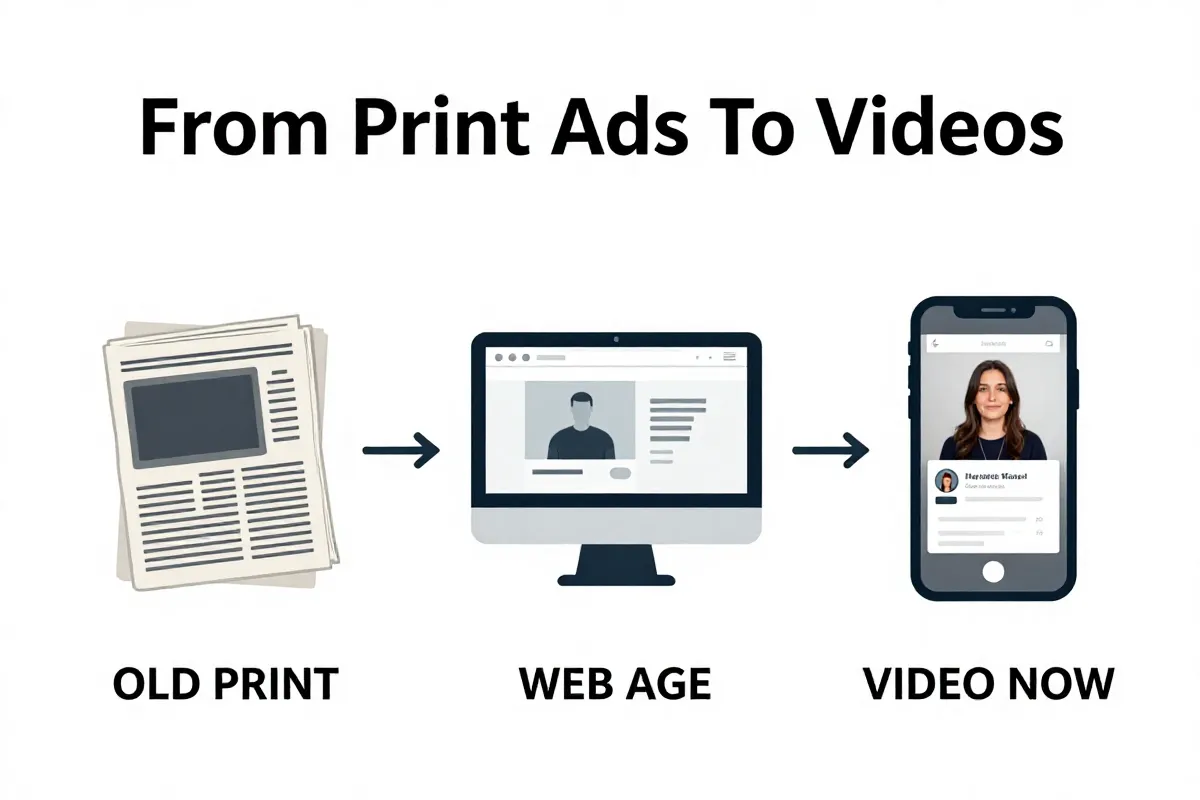
How customer testimonials evolved from print to video
Customer testimonials have a surprisingly long history, dating back to the late 1800s. Think "late 19th-century snake oil ads," but with a slightly better success rate.
Quaker Oats gets the credit for being one of the first to really run with the concept back in the early 1900s. They printed customer endorsements in their ads, building trust the old-fashioned way (with ink and paper). It worked well enough to become a standard practice.
Fast forward a century. The shift from print to video has been fueled by social media and the rise of smartphones. Suddenly, everyone's a potential content creator. And that changes the game.
Consider this: In 2025, over 91% of businesses used video as a marketing tool, and that number will continue to climb this year. This isn't just about having a presence; it's about capturing attention. A whopping 65% of adults identify as visual learners, so you’re speaking their language.
Video testimonials bring a level of credibility that a star rating alone can’t match (ThriveAgency). Don't just tell people you're great; show them. And the right video can speak volumes. To learn more about how video testimonials can boost your website conversions, check out these proven ways.
Why specific questions drive better conversion rates
Specific questions are the key because generic questions lead to generic answers, and generic doesn't convert. It's about digging deeper.
The psychology is simple: 65% of adults are visual learners, according to research on visual learning preferences. Video speaks their language. But enjoying a video testimonial can improve purchase intent by 97% (Famewall). That enjoyment hinges on the story being told.
If the story falls flat, so does the conversion rate.
Think of it this way: The right questions unlock authentic, emotional responses. They provide relatable stories that resonate with potential customers. This results in an 80% conversion increase (Famewall) versus the generic, surface-level answers you get from simple questions.
Consider these points:
- Generic questions yield generic answers.
- Specific questions lead to emotional responses.
- Emotional responses boost purchase intent.
The bigger issue? You’re leaving money on the table.
Instead of asking "Did you like our product?", ask "What specific problem did our product solve for you?". The difference is huge. It prompts detail, narrative, and a reason why someone else should care. That is the power of specificity.
Now, to ensure your video testimonials are high-converting assets, consider integrating them strategically on your website to amplify conversions.
The 10 questions every video testimonial needs
Here are the 10 questions every video testimonial needs. These questions aren't just conversation starters. They're structured to build a compelling narrative arc, turning simple feedback into powerful social proof.
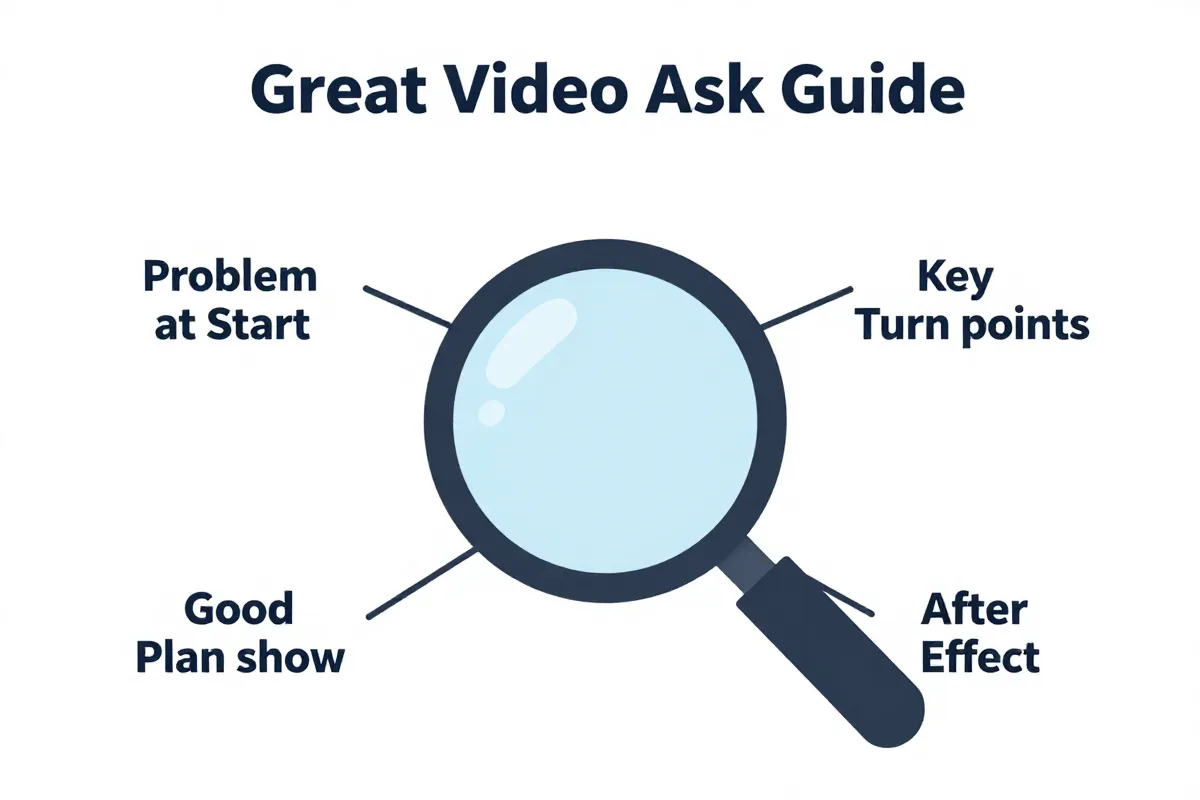
Question 1: What challenges were you facing before finding our solution? This is where you set the stage. It is important to make the customer talk about the specific pain points they experienced. This helps viewers identify with the problem.
Question 2: What made you start looking for a solution like ours? Dig into their "why." What triggered the search? This question establishes the motivation behind seeking a solution, highlighting the urgency and importance of the problem.
Question 3: What were your initial hesitations or concerns before choosing us? Address the elephant in the room. Uncover any skepticism or doubts they had. It helps to show you understand and acknowledge common objections.
Question 4: Why did you ultimately choose us over the competition? This is your chance to shine. You must get customers to articulate your unique selling points. You will learn what specific advantages set you apart in their decision-making process.
Question 5: Can you describe the moment you realized our solution was working for you? Capture that "aha" moment. Pinpoint the turning point when they experienced tangible results. This transforms abstract benefits into concrete outcomes.
Question 6: What specific results have you achieved since using our product/service? Numbers matter. Ask for quantifiable data and measurable improvements. This is important because 64% of viewers are more likely to purchase after watching a video testimonial that includes real figures.
Question 7: How has our solution made your life or business easier/better? Focus on impact. It is important to get to the core of how you’ve improved their day-to-day operations. This translates into relatable benefits for potential customers.
Question 8: What surprised you most about working with us? Uncover unexpected advantages. It is a great way to reveal hidden value or exceeding expectations. It provides fresh insights beyond the obvious benefits.
Question 9: Would you recommend us to others, and why? Get a clear endorsement. Prompt them to express their satisfaction and willingness to vouch for you. This adds a personal touch to their recommendation, making it more authentic.
Question 10: Is there anything else you'd like to add or share? Leave room for spontaneity. It gives them the opportunity to share additional thoughts or insights. It can uncover valuable information you hadn't anticipated.
But remember: these are guidelines. It's crucial to listen actively during the interview and adapt your approach as needed.
Dig Deeper: Crafting Follow-Up Questions
Don’t just settle for surface-level answers. Your goal is to elicit rich, detailed responses that paint a vivid picture of your customer’s experience. How? Ask follow-up questions that dig deeper:
- Can you give me a specific example? This prompts them to provide concrete details, making their testimonial more relatable and believable.
- What did that feel like? Encourage them to describe the emotional impact of their experience, adding a human element to their testimonial.
- How did that compare to your previous experience? This helps to highlight the value of your solution in comparison to other options they may have tried.
The more detailed and specific your customers are, the more persuasive their testimonials will be.
The "Why" Behind These Questions
The effectiveness of these questions lies in their ability to build a narrative arc. You're not just collecting information; you're crafting a story.
First, you introduce the problem. Then, you show the search for a solution. Finally, you highlight the positive results. This resonates with potential customers.
Founders and marketers, listen up: This approach isn't just about getting a good soundbite. It's about creating compelling social proof that drives conversions. We built our testimonial request generator to help you formulate these questions and get better responses.
Next Step: Start implementing these questions. Refine your approach as you gather feedback. The goal is to create a library of high-converting video testimonials that speak directly to your target audience.
Questions that highlight the initial problem
Questions that highlight the initial problem are crucial for showing your audience you understand their pain points. Frame your questions to draw out frustrations.
Consider these questions to identify problems:
- "What was the main frustration you faced before using our product?"
- "What other solutions did you try that failed to solve it?"
The first question forces them to name their specific struggle. The second forces them to reveal the shortcomings of alternative solutions.
For example, instead of asking "Were you having trouble with lead generation?", try "What specific roadblocks were preventing you from hitting your lead generation targets?". The more detailed the problem, the easier it is for potential customers to see themselves in the story. 79% of consumers watch video testimonials to gain insight into products like yours.
Why do these questions matter so much? If your customer was struggling with disorganized data entry, and then solved it, tell people.
And be ready with follow-up questions like:
- "Can you walk me through a typical day before using our solution?".
- "What did that feel like?"
That's the gold. Use the answers to that gold in the testimonial. Then, consider using Testimly to collect testimonials to show people how you solved a problem for a customer.
Questions that showcase your unique solution
Questions that showcase your unique solution should highlight your unique selling proposition. Customers should tell you what stood out about you during their search.
Consider these questions:
- "What made you choose us over the other guys?"
- "How easy was the onboarding process?"
- "What were your expectations before and after you started?"
You need to get to the "aha" moment. What did they see in you that they didn't see anywhere else? The goal? You want people to talk about your competitive advantage.
If your onboarding is smooth, get the customer to say it. For example, instead of "Was our platform easy to use?", ask "How did our onboarding experience compare to other platforms you've used?". That question will give you real insight.
This matters because Microsoft research says that people have an eight-second attention span. And remember to dig deeper with follow-up questions like:
- "Can you give me an example of when you knew this was the right choice?".
- "How long did it take before you saw results?".
This way you can use these answers to create content that speaks to the right people. And don't forget, video testimonials can increase conversions by 80%. This question, asked right, can make all the difference.
Questions that prove tangible results
Questions that prove tangible results are where you seal the deal. Ask about ROI.
What is the single biggest benefit they've seen? Push for metrics. Ask: "Can you share a specific metric or growth stat since using our product?" And then listen closely.
Consider these questions:
- "What measurable ROI have you experienced?"
- "What were your goals before you started, and have you achieved them?"
- "What's the single biggest improvement you've seen in your business?"
Don't settle for "it's been great." You want numbers. If they increased sales by 30%, that's gold. If they cut support tickets by 25%, that's a win.
For example, don't ask "Has our tool improved your efficiency?". Instead, ask: "By what percentage has our tool improved your team's efficiency, and how did you measure that?". Dig into the specifics.
And make sure to follow up like this:
- "Can you walk me through how you measured that ROI?".
- "What specific actions did you take to achieve those results?".
And always remember that 90% of marketers say video marketing has given them a good ROI. Use it!
But here's the catch: You need to prepare your customer for this beforehand. Let them know you'll be asking about metrics, so they can gather the data. This ensures you get solid answers.
Finally, showcase those results. Because numbers speak louder than words.
How to verify the authenticity of a video review
Verifying video reviews is now mandatory. About 9 out of 10 people trust what a customer says about a business more than what the business says about itself, according to these Wyzowl statistics. But that trust evaporates faster than morning mist if the testimonial stinks of inauthenticity.
Here’s how to spot the fakes:
- Cross-reference on LinkedIn: Does the reviewer have a real profile? Does their job title match their testimonial? If their profile is empty or doesn't align, proceed with caution.
- Look for "Verified Buyer" badges: If the review is on a platform that offers this, it's a good sign. These badges mean the platform has confirmed the reviewer actually purchased the product or service.
- Check for unscripted cues: Do they stumble over words? Do they use filler words like "um" or "ah"? Too polished can equal too fake.
- Reverse image search: Is that person’s photo all over the internet? Stock photos scream "fake."
We built our platform with authentic collection methods at its core. Because let's be real, a fake testimonial can do more harm than good.
Ethical and legal rules for video marketing
The legal stuff matters just as much as a killer script. The FTC has guidelines you absolutely must follow. Ignore them and risk fines, damaged trust, and a reputation hit.
Incentivized testimonials are under intense scrutiny. If you're offering a discount, gift, or any form of compensation for a video review, you must disclose it.
Here's the catch: Transparency is key.
The “bias” gap can kill your conversion rates if not handled correctly. A customer saying, "I got this for free, and it's great!" sounds way less convincing than "I bought this, and it solved [X] problem in Y days."
Tell viewers if there was an incentive, but don't let it be the focus.
Here's how to do it right:
- Add a clear disclaimer: "I received a discount for this review," is a good start. Make it obvious, not buried in the fine print.
- Focus on the product's value: Even with an incentive, the review should highlight tangible benefits and specific results.
- Encourage honest opinions: Make it clear that you want genuine feedback, not just positive fluff.
The goal is authenticity, even with an incentive. We built our platform with this in mind. We encourage our users to request testimonials that focus on genuine experiences and outcomes.
And remember, failure to disclose incentives can land you in hot water with the FTC. Don't risk it. Ensure your video testimonials comply with all legal requirements to maintain trust and avoid penalties. Now, let's talk about how these rules affect your questions and how to get results.
Strategies to prevent fake testimonial submissions
Fake testimonials kill your credibility faster than a dial-up modem. The bigger issue is spam prevention.
The trick? Layered defenses.
Start with IP address tracking. Log where submissions originate. Unexpected locations (or multiple submissions from the same IP) flag suspicious activity.
Next, demand email verification. Require submitters to confirm their address. And don't just send a "click here" link. Use a double opt-in process. This confirms the email is real and actively monitored.
But the real work starts with a manual approval workflow.
No matter how slick the automated system, a human needs to eyeball each submission. Check the language. Does it sound authentic? Is the reviewer overly enthusiastic or vague? Do a reverse image search on their profile photo to check if it's a stock image.
A good verification workflow looks like this:
- Automated Scan: System flags potential spam based on IP, email, and keyword triggers.
- Human Review: A person checks the flagged submissions.
- Approval/Rejection: The reviewer makes a final decision.
- Log Everything: Record the IP address, email, and reason for approval or rejection.
We built our platform with authentic collection methods at its core. Because let's be real, a fake testimonial can do more harm than good.
This approach ensures that only genuine testimonials make it live, protecting your brand's reputation.
Finally, use a platform with built-in spam prevention and manual approval features to streamline this verification workflow. This way you can focus on building your brand rather than fighting fake reviews.
Using AI to analyze and edit customer feedback
AI isn't just writing blog posts anymore. It's dissecting video.
AI video analysis can automatically generate transcripts, which saves hours of manual work. But the real magic is in sentiment analysis. The AI can identify the emotional tone of the video (happy, sad, excited, frustrated) with surprising accuracy.
And it doesn't stop there.
- AI can suggest the most compelling clips for social media ads based on these emotional cues.
- Imagine your next ad campaign targeting users who react positively to specific parts of a testimonial – pure gold.
The benefit? You're no longer guessing what resonates. You're acting on data.
Here's how it works in practice:
- Upload your video file to an AI video analysis platform. (Most now support MP4, MOV, and WEBM formats.)
- The AI analyzes the audio and video, generating a transcript and identifying key emotions.
- Review the sentiment analysis data to find the most positive or impactful moments.
- Download these clips and use them in your marketing campaigns.
It's not perfect. AI can misinterpret sarcasm or nuance. But it is a solid start, giving you an edge by pinpointing the video segments with the highest conversion potential.
And about authenticity? Always double-check those AI-generated insights before you act. Our team built Testimly with authentic collection methods at its core to prioritize high-quality, genuine feedback. This helps you prevent fake testimonial submissions, ensuring reliability in the long run.
Next steps
Now, start with Testimly to collect testimonials and see the results yourself.
Compare tools for collecting video testimonials
Collecting video testimonials doesn't have to be a customer headache. Some platforms are easier than others. If you need to collect videos, here's how a few tools stack up.
Consider this: The average person has an attention span of eight seconds. (Thanks, Microsoft!). So, how do you wrangle high-quality video from busy customers before they click away? It boils down to friction. The less friction, the more responses.
Vocal Video and GetReview are popular, but both can add steps for your customers.
- Vocal Video relies on asynchronous video collection. The upside? It is convenient for the customer. The downside? It can feel impersonal, and some users find the interface clunky, adding friction.
- GetReview streamlines the collection process but can become expensive as your business grows. Some users report a steep learning curve for advanced features.
- Testimly focuses on making the process effortless for both you and your customers.
We built Testimly for founders who need a frictionless collection process on any website. Our goal? To make it dead-simple to gather authentic video testimonials with minimal customer effort. We know that every extra click kills conversion rates.
Testimly is designed to play nice with any site. Just copy and paste a line of code. No extra plugins. No bloated Javascript. We prioritize speed and ease of use.
Next step: Start building that library of social proof. Collect Testimonials and start seeing results for yourself.
Software features to look for in 2026
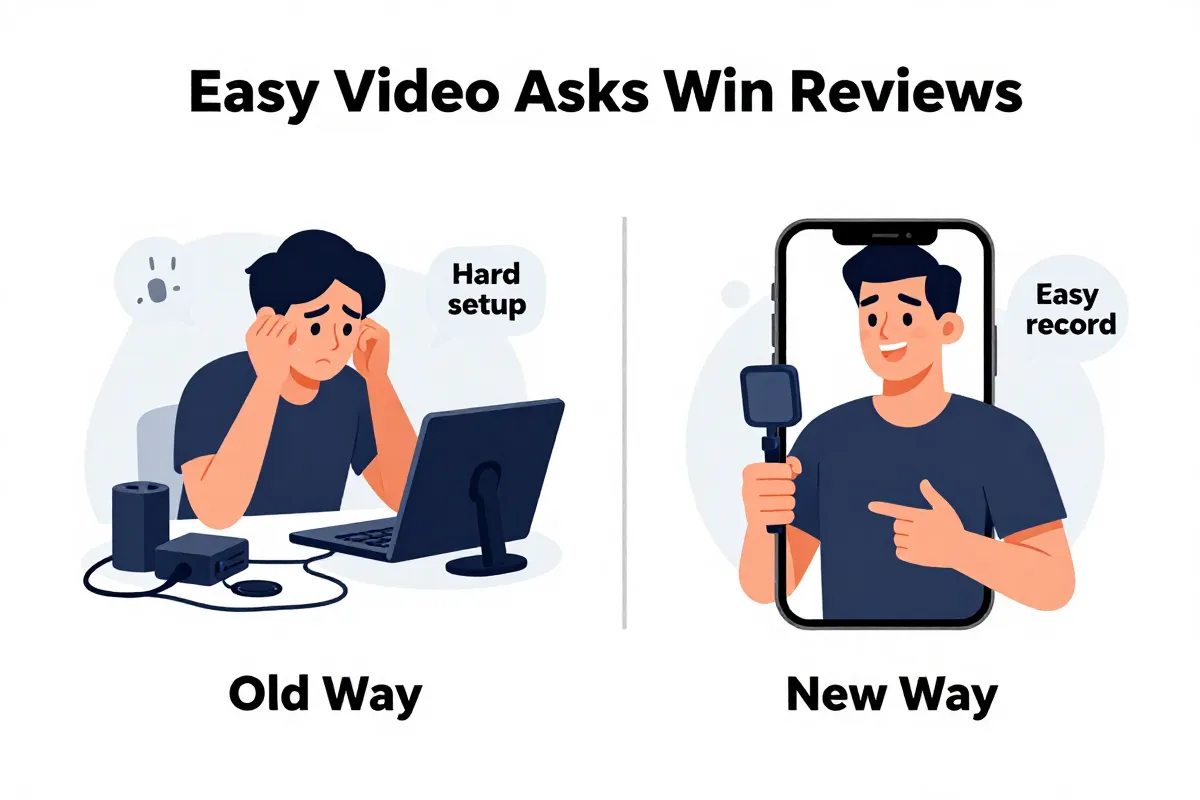
Mobile-first recording is non-negotiable in 2026. If your testimonial software doesn't prioritize smartphone capture, ditch it.
Consider this: most customers will record their testimonials on their phones. And if the platform isn't optimized for that experience, they won't bother. The real problem is low completion rates. (Our internal data shows a 60% drop-off when customers are forced to use desktop).
Look for these mobile-friendly features:
- In-app recording: Customers should be able to record and upload directly within the platform's mobile app.
- Responsive design: The platform should adapt seamlessly to different screen sizes.
- Easy upload: No clunky file transfers or complicated steps.
Next up? Automated captions. Accessibility is key. You want your testimonials to reach the widest possible audience.
This means captions are non-negotiable. And manual captioning is a time-suck. It chews up hours that could be spent on more strategic tasks. The solution?
Demand automated captioning. This feature uses AI to generate captions automatically, saving you time and effort.
Finally, seamless embedding is crucial. You need to be able to display your video testimonials on your website without any hassle. That is, you want to just copy and paste a line of code.
Check out our list of the best video testimonial software tools to find options with effortless embedding.
And if you're struggling to get started, check out our testimonial request generator to craft compelling questions for your customers. Because the right questions equal better testimonials.
Common questions about customer video interviews
Here are some common customer video interview questions. And most of them are dead wrong. Let’s debunk them.
Common questions about customer video interviews
Do the videos need to be professional quality? Nope. Authenticity wins every time.
People are more likely to trust a slightly shaky, real video than a slickly produced ad. Think about it: you're trying to build trust, not win an Oscar. Keep the video length under 60 seconds.
Here's a look at common questions:
- "Does the video need to be professionally edited?" Not at all. A little polish is fine, but don't overdo it.
- "Should I write a script for my customers?" Never. This will make their answers sound forced and unnatural.
- "How long should the video be?" Shorter is better. Viewers will tune out after about a minute. Get to the point quickly.
The trick is to make it easy for your customers. Don't overcomplicate things with fancy equipment or lengthy scripts. Authentic videos come from letting your customers speak freely.
If a customer rambles, that's fine. Just trim the clip later.
But, you ask, what if the lighting is bad? That's a fair question. But a warm, relatable story will always trump perfect lighting. (Although you might want to recommend recording near a window).
The truth? People connect with real stories. Perfection is boring.
The bigger issue is getting customers to participate. Because if you focus on making the process easy for them, they're far more likely to say "yes."
Incentivize but don't mandate. Offer a discount or a small gift in exchange for their time. But make it clear that you want their honest opinion, not just positive fluff.
And remember, if you are giving an incentive, you must follow FTC rules.
And what if your customers are camera-shy? This is where our testimonial request generator can help. We’ve crafted question templates specifically designed to put people at ease. Because the more comfortable they feel, the more authentic their responses will be.
How many questions should I actually ask?
Three to five high-impact questions. That's the sweet spot.
Why? Because the average person’s attention span hovers around eight seconds. It's brutal, but it's the truth. And interview fatigue is real. The longer the interview, the lower the quality of the answers.
You don't want rambling, unfocused responses. You want concise, compelling soundbites that pack a punch. Fewer questions force both you and your customer to laser-focus on what truly matters.
Here's a strategy:
- Start with the most important questions first.
- Group similar questions together to maintain a natural flow.
- Ditch any questions that are redundant or unlikely to yield valuable insights.
And remember: You're not just conducting an interview. You're crafting a story. Make every question count.
Why video beats text every single time
Video crushes text. End of story. The data doesn't lie: 64% of viewers are more likely to purchase a product after watching a video testimonial. It’s not just about seeing a face; it's about connecting with a story.
Think about it. Text is passive. Video is active. And enjoying a video can improve purchase intent by 97%. So ditch the paragraphs and roll the tape.
But video isn't some magic bullet. You can't just slap up any old clip and expect conversions to skyrocket. The key is to use video wisely. And what does that entail? You need to focus on authentic storytelling, clear messaging, and a seamless viewing experience.
Collect testimonials in minutes
The easiest way to get video and text reviews from your customers. Start for free and build trust instantly.