Why People Trust Online Reviews as Much as Friends
I recently dug into our Q4 2025 consumer data. It confirmed what we’ve seen: 93% of users made a buying decision last year based solely on an online review. That number should grab your attention.
Online reviews are digital word-of-mouth that helps people trust unknown products and services. This isn't just about social proof.
Our brains are hardwired for collective opinion. We instinctively value what the crowd says, even when those voices belong to total strangers. It's a primal shortcut for making quick, confident choices.
The trust gap between a friend’s recommendation and an online review? It’s almost gone. 88% of consumers now trust both sources nearly equally. You can't ignore this shift.
Psychological triggers behind online review trust
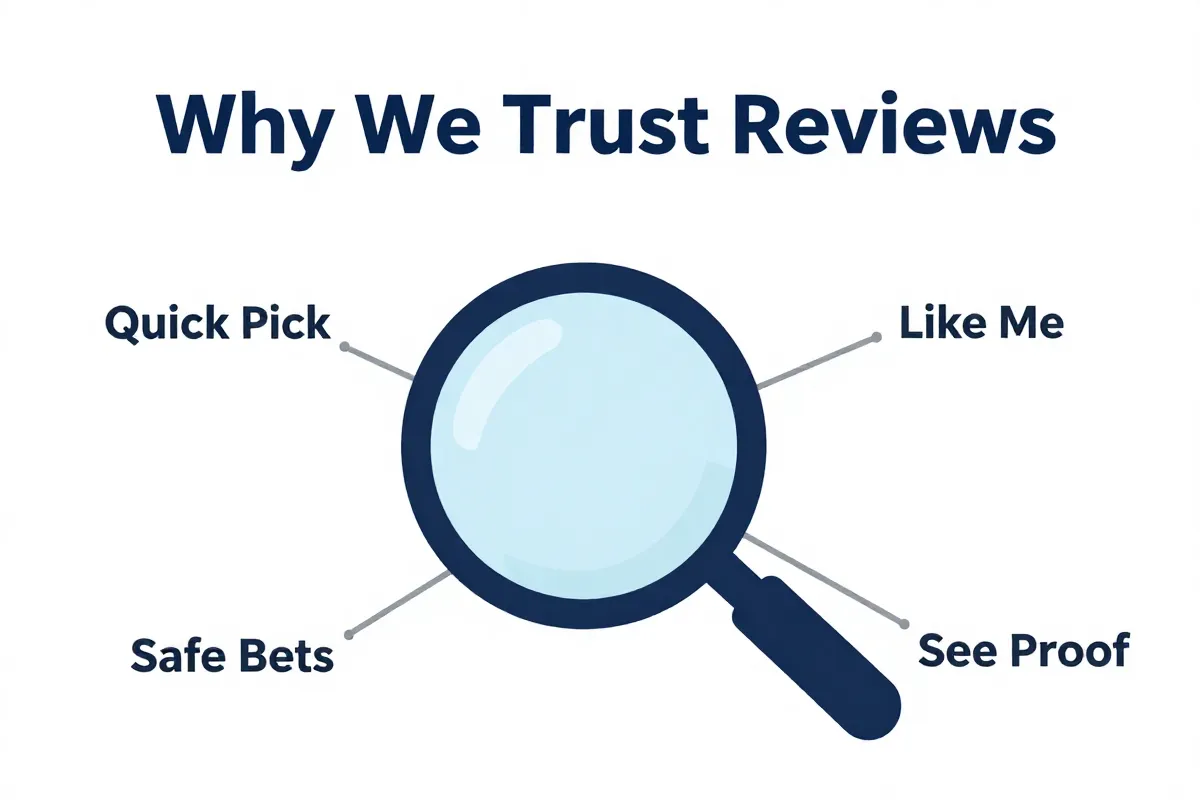
People trust online reviews because of deeply ingrained psychological triggers. These triggers act as mental shortcuts, helping us make decisions with less effort.
One of the most powerful is social proof. It’s the "busy restaurant" principle. We assume that if a lot of other people like something, it must be good. An empty restaurant? Pass. A packed one? Worth the wait.
This leans into cognitive biases, particularly the bandwagon effect. The more people who believe something, the more likely others are to jump on board, regardless of their own opinions.
Reviews also significantly reduce the perceived risk of a purchase. Buying something new always involves a degree of uncertainty.
But if hundreds of people have already bought and reviewed the product, you can see potential pitfalls. You're not the guinea pig. You have data. According to ReviewDriver.com, over 90% of shoppers read multiple reviews before making a purchase.
And, women value reviews more than men, with 87% of female shoppers saying that reviews directly affect their purchase decisions, compared to 78% of male shoppers.
So, how do you leverage this trust? Simple: make sure you're collecting and showcasing authentic reviews. And, when asking for testimonials, take a look at how to ask for reviews to get the most effective responses.
Next up, let's examine how these reviews actually affect purchasing decisions, because it's not as simple as "more reviews = more sales".
How social proof reduces purchase anxiety
Seeing other people successfully use a product provides instant validation, reducing purchase anxiety. It’s a safety-in-numbers game.
Imagine you're eyeing a new espresso machine. One review saying "it's okay" doesn't move the needle. But one hundred glowing reviews? That's compelling.
That volume provides psychological security that a single review simply can't match. The average consumer reads up to 10 online reviews before deciding to buy. More reviews = more data points to validate a positive experience.
User-generated content, especially authentic customer videos, really shines here. Check out how driving growth with authentic customer videos can showcase real experiences and alleviate buyer concerns. Seeing is believing, after all.
Cultural differences in review interpretation
Online reviews are not interpreted the same across the globe. Cultural nuances dictate how much weight someone gives to a review and the type of review they find most convincing.
One key differentiator is the emphasis on individual versus collective opinion. In some Western cultures, an expert review carries significant weight because it represents an individual’s informed perspective.
Conversely, many Asian cultures prioritize peer consensus. A product with hundreds of positive reviews from average users holds more sway than a single expert opinion. This reflects a cultural emphasis on community and shared experiences.
Another factor is the level of directness in communication. In some cultures, reviewers tend to be more indirect and polite, focusing on minor issues rather than harsh criticisms.
This can make it challenging for outsiders to accurately interpret the review's overall sentiment. A seemingly positive review might actually signal underlying dissatisfaction. It's a fine line.
And, the source matters. Online reviews are considered as essential in shaping consumer decisions, with many trusting them as much as personal recommendations (ReviewDriver.com). It is not all about sales numbers and conversions; 86% of employees and job seekers research company reviews before applying.
Finally, consider the platform. Some cultures heavily rely on local review sites, while others prefer global platforms. Before expanding into a new market, research the dominant review platforms and tailor your strategy accordingly.
Understanding these cultural nuances can significantly impact your ability to build trust and credibility with diverse audiences.
Factors that determine if a review is believable
A review's believability hinges on whether it feels authentic and trustworthy. It's not just about a star rating; it's about the story behind it.
Integrity, quality, and consistency are the pillars of a convincing review. But, how do you spot them?
Spotting a Real Review
Look for reviews that display these elements:
- Detailed narratives: Genuine reviews often provide specific details about the product or service, showing the reviewer actually used it. The more specific the details, the more believable it becomes.
- Balanced perspective: A believable review highlights both positives and negatives, instead of sounding like a sales pitch. Acknowledging shortcomings builds trust.
- Consistent Sentiment: When multiple reviews echo similar experiences, it creates a pattern of consistency. This lends credibility, suggesting the feedback is reliable.
The "Integrity of the Reviewer" Factor
The reviewer's perceived integrity matters as much as what they write. Are they a real person? According to the latest Local Consumer Review Survey, the majority of consumers now value online feedback as much as personal recommendations. But that trust can be shattered by anonymous or obviously fake accounts.
Here's what to look for:
- Profile verification: Does the platform verify the reviewer’s identity? (e.g., a "Verified Buyer" badge).
- Review history: Does the reviewer have a history of writing reviews on various products or services? Or is this their only review?
- Absence of red flags: Watch out for generic usernames, overly enthusiastic language, or suspicious profile pictures. It is estimated that 30% of online reviews are fake.
"Quality of Argument"
A well-reasoned review carries more weight.
Think of it like a courtroom argument. The better the evidence, the more convincing the verdict.
- Clear reasoning: Does the reviewer explain why they liked or disliked something? Or do they just make blanket statements?
- Objective tone: Emotional rants or overly aggressive language can be a turn-off. Look for a calm, rational assessment.
- Relevant information: Does the review address your specific concerns? (e.g., if you're worried about battery life, does the review discuss it?).
But here's the catch: even if a review seems perfect, it could still be fake. So, trust your gut. If something feels off, it probably is.
Don't overlook the importance of seeing how others have found value through customer testimonials, consider ways to boost website conversions.
Prioritizing Google Reviews
Consumers often head straight to Google when checking out a business. 81% of people check Google reviews before deciding to visit a business. Make sure you're monitoring and responding to reviews on Google. Because, people value that effort.
Now, to summarize this for you, here are a couple things that determine the believeablity of a review, these are:
- The integrity of the reviewer and quality of their arguments.
- The consistency of what is being said and if the reviews echo each other.
Next, let's dive into how this is impacted by authenticity and trust.
Impact of review recency and frequency
A stream of current reviews is as important as the overall star rating. The information quickly becomes stale.
Review recency and review frequency go hand-in-hand. A 5-star review from three years ago? It's practically useless. It doesn’t reflect the business's current state.
Consumers want to know what’s happening now. Has the service improved? Did the quality drop off? Consistent, recent feedback is what builds confidence.
Think of it like a weather report. A forecast from last month is worthless. You need an up-to-the-minute update to plan your day.
Consumers seek a steady flow of opinions, not just a burst of praise from long ago. A consistent stream of feedback indicates ongoing engagement and a business that cares about its reputation. It shows commitment.
Consider a scenario: a restaurant with dozens of 5-star reviews, all from five years ago. But no new reviews in years? That's a red flag. What happened?
Maybe the chef changed, the ingredients went downhill, or the service tanked. Recent reviews are crucial to paint the most accurate picture.
But what if you don't have a constant flow of reviews? Beg people, not really but ask politely. When asking for testimonials, make sure you are asking the right questions so you get a review that is believeable.
So, how do you ensure a steady stream of fresh feedback?
- Automate the request process: Use tools to automatically request reviews after a purchase or service.
- Make it easy: Provide direct links to your review profiles on Google, Yelp, and other relevant platforms. Don’t make customers hunt for them.
- Respond promptly: Show customers you care by responding to both positive and negative reviews. Acknowledge feedback and address concerns.
Authenticity and believability in reviews aren't just about what's written. The timeliness of the content matters just as much. So, prioritize keeping your review stream fresh and consistent.
Why length and specific details matter
Longer reviews are typically seen as more useful because they provide more context and information. Shorter reviews, like "Great product!", offer little insight.
Descriptive feedback is what readers crave. It helps them determine if a product or service aligns with their needs.
Reviews with specific use cases are even better. Imagine a review that says, "I used this blender to make smoothies every morning for a month, and it handled frozen fruit without any issues." That kind of detail helps the reader visualize themselves using the product. It's relatable.
The bigger issue is perceived helpfulness.
- Detailed Narratives provide the specific details about the product or service that the reviewer used.
- Visualisation: Specific use cases help the reader visualise themselves using the product.
The catch?
Review length doesn't automatically equate to quality. A long, rambling review filled with irrelevant information is useless. Focus on reviews that are detailed, specific, and address your concerns.
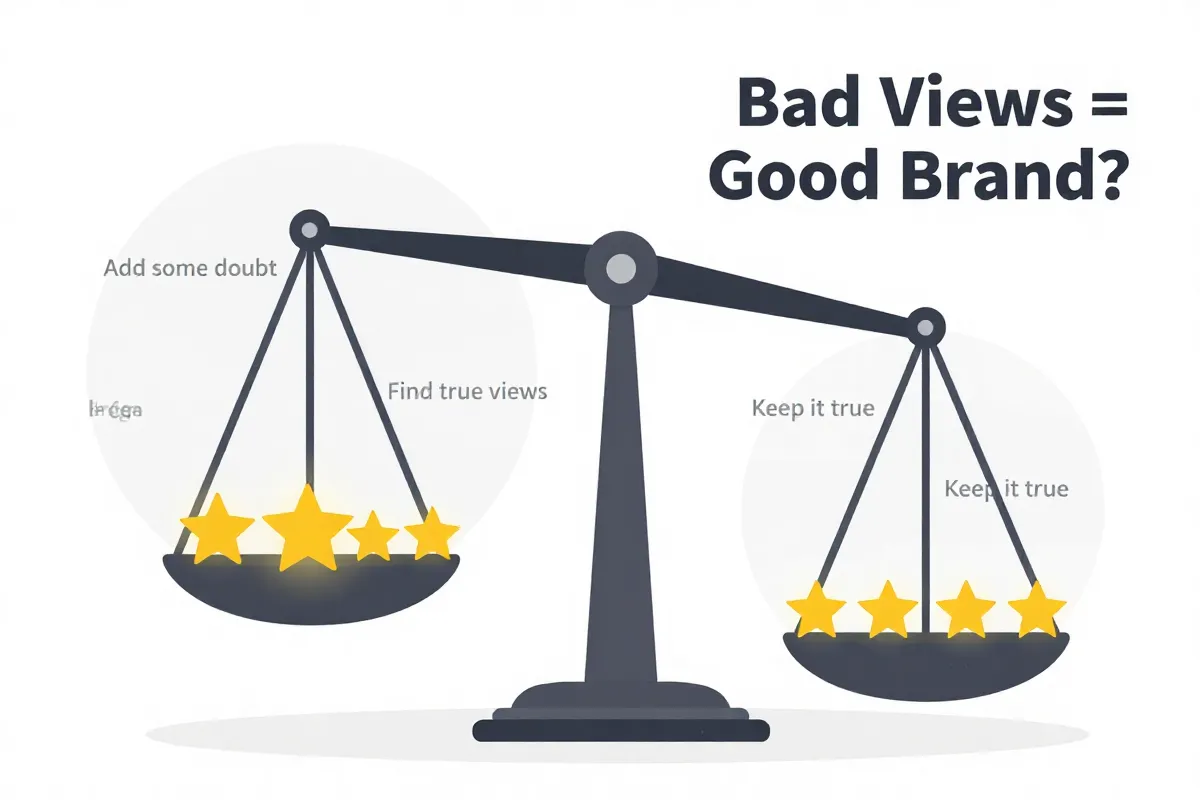
Why negative reviews can increase brand integrity
A perfect 5.0 rating is viewed with suspicion because no product or service is flawless. Customers know this.
Aim for the "perfectly imperfect" sweet spot. Usually a rating between 4.2 and 4.7 stars feels the most authentic to prospective buyers.
Negative reviews provide a balanced perspective, and here's why that's important:
- They demonstrate transparency. Hiding negative feedback suggests you're not confident in your offering.
- They make positive reviews more credible. When all the reviews are glowing, it raises a red flag 🚩.
- They give potential customers a realistic expectation. Knowing the potential downsides helps people make informed decisions.
The "quality of argument" is why negative reviews matter. Was the customer ranting about the price, or did they have a legitimate issue with the product's functionality?
Smart businesses respond to negative feedback. This shows you're listening and willing to improve. Ignoring criticism, that is when customers start to ignore you.
How consumers use bad reviews to judge risk
Consumers often read negative reviews first to mentally prepare for the worst-case scenario. Can they live with it? Do the downsides outweigh the benefits?
It's a form of risk assessment. They're checking for deal-breakers. If a product has a history of breaking after a month, that's valuable information (especially if the warranty is shorter).
This builds trust because a brand isn’t trying to hide its flaws. Acknowledging shortcomings is a sign of authenticity. A balanced perspective is important.
How to spot and handle fake reviews
Spotting fake reviews is crucial because roughly 30% of online reviews are estimated to be fake. This review manipulation erodes trust and can seriously damage your business's reputation.
So, how do you identify review spam, and more importantly, what can you do about it?
Recognizing telltale signs of fake reviews
Fake reviews often share common characteristics. They are usually overly enthusiastic, generic, or lack specific details.
- Look for extremes: Is the review excessively positive or negative without explaining why? That's a red flag.
- Check the language: Does the review use repetitive phrases or keywords? Is the grammar awkward, or does it sound like it was written by a non-native speaker?
- Examine the profile: Does the reviewer have a history of only reviewing one type of product or service? Are their reviews all posted within a short period?
If you see these signs, proceed with caution. Don't immediately dismiss the review, but investigate further.
Taking action against fake reviews
So, you've spotted a suspicious review. Now what?
Your first step should be to report the review to the platform on which it was posted. Most platforms have mechanisms for flagging suspicious content.
But reporting alone isn't enough. You also need to actively manage your online reputation. Here's how:
- Respond promptly: Acknowledge the review, even if you suspect it's fake. Show that you're paying attention and care about customer feedback.
- Be professional: Avoid getting into arguments or accusations. Present your side of the story calmly and factually.
- Highlight genuine reviews: Encourage your satisfied customers to leave honest reviews. This helps bury the fake ones. And be sure to take a look at 10 proven ways to boost website conversions with customer testimonials.
But here's the rub:
You can't delete negative reviews just because you don't like them. Trying to suppress legitimate criticism will only backfire. Focus on addressing the underlying issues and providing excellent customer service.
Using tools to detect and prevent fake reviews
Several tools can help you identify and filter fake reviews. Some use AI to analyze review content and identify suspicious patterns, while others monitor your online reputation and alert you to potential problems. We built our platform with features to flag suspicious reviews, allowing you to maintain the integrity of your feedback. The real key to success is proactive monitoring.
Don't let fake reviews damage your brand. By staying vigilant and taking proactive steps, you can protect your reputation and build trust with your customers.
Now, we'll examine the impact of review recency and frequency, because you are only as good as what you did yesterday.
Red flags for suspicious feedback
Spotting review spam starts with recognizing suspicious patterns. It's about more than just a gut feeling; it's about identifying concrete red flags.
Here's what to watch for:
- Repetitive Phrasing: Does the review use the same words or phrases multiple times? Do several reviews use the same generic praise? That’s suspicious.
- Lack of Detail: Does the review fail to provide specific details about the product or service? A real user will describe what they used, how they used it, and why they liked or disliked it.
- 5-Star (or 1-Star) Only Accounts: Does the reviewer exclusively post 5-star ratings (or the opposite – only negative)? Legitimate users have a mix of ratings.
- Sudden Surge: Did a bunch of reviews appear all at once? It could be a coordinated effort.
Trust your gut. If something feels off, investigate.
Language patterns to watch for
Language gives away fake reviews. Suspicious linguistic markers reveal inauthentic feedback, and you can usually spot them a mile away. It's like hearing someone read from a script.
One clear sign is the excessive use of "I" or "me." Authentic reviews naturally focus on the product or service experience, not the reviewer's personal feelings. Too much self-referential language suggests the reviewer is trying too hard to build credibility.
Overly formal or technical language is another red flag. Does the review sound like marketing copy rather than a customer's authentic voice?
- Watch out for phrases like "state-of-the-art" or "best-in-class."
Real people don't talk like that. They describe their experience in plain language. And, an overuse of superlatives is usually an indicator of an inauthentic review, too.
Also, be wary of reviews that are too perfect. Real customers almost always have at least a minor complaint or suggestion for improvement. A review that is unreservedly positive might be too good to be true. That is because a balanced perspective matters.
Legal risks of review manipulation
Review manipulation isn't just a shady marketing tactic; it can land you in serious legal hot water. The Federal Trade Commission (FTC) provides strict guidelines on endorsements to ensure that testimonials are honest and not misleading.
Soliciting fake reviews, or paying for positive feedback, can lead to heavy fines and platform bans. And, depending on the severity, even lawsuits.
- The ethical considerations alone should give you pause.
- The potential financial and reputational damage should be a deterrent.
The legal implications extend to both the business and the individuals writing the fake reviews. Don't risk it.
Here's how these issues can affect your business:
- Financial Penalties: The FTC can impose substantial fines on businesses caught engaging in deceptive practices, including the use of fake reviews.
- Reputational Damage: Discovering you have been involved in creating fake reviews ruins your reputation, leading to a loss of customer trust.
- Legal Action: Consumers or competitors can pursue legal action against you for unfair competition and deceptive advertising.
Instead, focus on earning genuine reviews through excellent service and transparent communication. And, when asking for testimonials, make sure you're not influencing the feedback in any way. Be ethical.
Practical ways for brands to build authentic trust
Practical ways for brands to build authentic trust involve actively seeking and showcasing genuine feedback. Trust is paramount, and that means you can't fake it until you make it.
You need to cultivate an environment where honest opinions are encouraged and valued. But, how?
- Actively solicit feedback: Don't wait for reviews to trickle in. Proactively ask customers for their thoughts.
- Make it easy to leave reviews: Provide direct links to your review profiles on Google, Yelp, and other platforms. The fewer clicks, the better.
The bigger issue is how to manage what comes in. You need a system.
Implement a robust review management system
A good review management system helps you respond to feedback quickly, and identify patterns. It also gives you the option to automatically flag any suspicious content that looks like review manipulation.
Here are some factors to consider when building your system:
- Monitor all relevant platforms: Don't just focus on Google. Track reviews on industry-specific sites, social media, and your own website.
- Respond promptly and professionally: Acknowledge all reviews, both positive and negative. Show customers you're listening and care about their experience.
- Analyze feedback for trends: Look for recurring themes in the reviews. Are customers consistently praising a specific feature or complaining about the same issue?
Testimly provides a centralized hub for managing all your reviews. Our platform is designed to streamline the review management process, allowing you to easily monitor feedback, respond to customers, and analyze trends. But, we didn't stop there.
Showcase authentic testimonials
Don't hide your reviews on a buried page. Prominently display them on your website. Make it easy for potential customers to see what others are saying about your business.
Authentic testimonials reduce purchase anxiety and give potential customers a realistic view of your product or service. This should be everywhere.
Our tool helps you turn customer feedback into compelling marketing content. We built in the ability to collect and display customer videos. Seeing real people talk about their experiences builds way more trust than just reading text reviews. Plus, you can turn customer success stories into engaging content with driving growth with authentic customer videos.
Be transparent about negative feedback
Don't delete or hide negative reviews. That just makes you look shady. Instead, address the issues head-on and show customers you're committed to improvement.
Responding constructively to negative feedback demonstrates integrity. It shows you're willing to acknowledge shortcomings and learn from your mistakes. This shows potential clients that you are trust worthy and that you value them.
Leverage video testimonials
Video testimonials are more engaging, and more believable, than text reviews. They provide a human element that text reviews can't match. As a bonus, they tend to be more effective.
Our team focused on video because it's what customers want to see. We make it easy to collect, manage, and share video testimonials across all your marketing channels. You can easily embed video testimonials on your website, share them on social media, or use them in your email campaigns.
So, here is what to do next: start actively soliciting reviews, implementing a robust review management system, showcasing testimonials, and leveraging video.

The power of video over text
Video testimonials carry more weight than text because it's harder to fake a real human being. Seeing a face builds trust.
It isn’t just about visual proof. It's about emotional connection. Video allows potential customers to see and hear the genuine enthusiasm (or disappointment) of others.
- Sincerity shines through.
- You can't fake that in a typed review.
The human element is amplified through video. Subtleties in expression, tone of voice, and body language all contribute to building a more authentic connection with the viewer. This is something that text simply cannot replicate. Seeing someone's face while they talk about their experience naturally boosts the trust factor. It’s harder to lie when you’re on camera. And, since you are building trust and trying to maintain integrity, be sure to check out how to ask for reviews.
But, the power of video also extends to its ability to tell a more compelling story. A customer can visually demonstrate how your product helped them solve a problem. This provides a level of detail and context that you won't get in a text-based review.
How to ask for honest customer feedback
It all boils down to the approach. You can't demand reviews. It doesn't work.
The key is building a sustainable feedback loop, so you're consistently hearing from happy (and unhappy) customers. Here's a simple three-step strategy that doesn't feel pushy:
- Identify happy customers: Target customers who’ve had a positive experience, like those who recently made a repeat purchase or left a positive comment on social media. These folks are already primed to give good feedback.
- Personalize your outreach: Don't send generic, mass emails. Craft personalized messages that acknowledge their specific purchase or interaction. A little personalization goes a long way.
- Make it dead simple: Provide a direct link to your review profile on Google or another relevant platform. The fewer clicks required, the better the response rate.
To maximize your response rate, you should follow a proven framework for how to ask for reviews at the right time in the customer journey.
The best time to ask is immediately after they've experienced success with your product or service. It is important to take note of what that looks like and to take advantage of that timeframe.
- Did they just complete a key task?
- Did they leave a positive comment?
- Did they reach out to praise customer support?
Those are ideal moments to strike. Don't wait a week.
And be sure to thank them for their time, whether they leave a review or not. A little gratitude shows you value their feedback.
Long term impact of reviews on brand loyalty
Reviews aren't just about quick conversions. They're about creating lasting relationships that increase customer lifetime value.
Think of online feedback as the lifeblood of a modern business, coursing through every customer interaction. The goal isn't just to get a five-star rating. It’s to build a transparent relationship with your audience.
Honest feedback is fuel. It reinforces brand values, helping to increase trust and promote community building. Here’s how:
- Consistent Engagement: Regularly interacting with reviews, both positive and negative, shows you're attentive and dedicated to customer satisfaction.
- Loyalty Reinforcement: Customers who see their feedback valued are more likely to remain loyal.
- Community Growth: A transparent and responsive brand fosters a sense of community, where customers feel heard and appreciated.
The bigger issue is that if you aren’t taking care of the clients you have, how can you obtain new ones? Customers who feel valued will advocate for your brand, increasing customer lifetime value.
So, start thinking of reviews not as vanity metrics but as building blocks for long-term success.
Common questions about online review trust
Consumers have many questions about review credibility. It's a minefield out there. Here are some quick answers to the most common concerns about online review trust:
FAQ: Cracking the Code of Online Review Trust
- How many reviews are needed before trusting a business? Most customers read between 4 to 10 reviews across various platforms before making a purchase decision, ReviewDriver.com reports. Don't stop at one.
- How do I identify fake reviewers? Look for generic usernames, overly enthusiastic language, and a lack of detailed information. Also, check if the reviewer has a history of only reviewing one type of product or service. We built our platform to flag suspicious reviews automatically, giving you a head start.
- What's a good star rating to look for? A perfect 5.0 rating is unrealistic. Aim for ratings between 4.2 and 4.7 stars. This range suggests authenticity and transparency.
- What do I do if I suspect a review is fake? Report the review to the platform immediately. Then, respond to the review professionally, presenting your side of the story calmly and factually.
- Why are negative reviews important? Negative reviews provide a balanced perspective and make positive reviews more credible. Smart businesses respond to negative feedback constructively. Ignoring criticism is never a good look.
- What is the ideal timeframe for a recent review? Recent reviews are vital. A review from over a year ago is basically irrelevant. Strive for consistent, recent feedback to maintain customer confidence.
The bigger issue? Online reviews influence credibility and trust, affecting online retail shopping behavior, according to sciencedirect.com. That's why you need a plan.
Do people still trust Yelp and Google in 2026?
Yelp and Google remain dominant in 2026, but trust isn't what it used to be. Consumers are savvier than ever. They’re still using these platforms for discovery, but they're also digging deeper.
Platform trust has evolved. People cross-reference. They compare Yelp reviews against Google reviews, and then check niche-specific forums.
Relying solely on one platform is a recipe for bad data. An average consumer could read a maximum of 10 online reviews before making a purchase, so make sure they are yours.
The bigger issue?
- Google and Yelp listings get you in front of new eyeballs.
- But authentic testimonials close the deal.
So, monitor all relevant platforms to make sure you are getting your brand in front of people.
Make it easy for happy customers to leave a review and get the ball rolling. After a customer has a good experience, be sure to ask them for honest customer feedback. You will get more out of those reviews than you may think.
Can a business delete bad reviews?
Can a business delete bad reviews? Absolutely not without risking severe damage to trust. You can and should flag fraudulent or spam reviews, but deleting legitimate criticism is a terrible idea.
Hiding negative feedback makes you look like you have something to hide. Transparency is key to building trust with customers, and censorship undermines that.
Think of it like this:
- Trying to scrub all negative reviews is like trying to hide a stain instead of cleaning it. Eventually, everyone will see the stain, and they'll think you're dishonest.
- Addressing those bad reviews shows that you are willing to work on any issues that may arise.
But the challenge is moderation. What crosses the line from "legitimate" to "fraudulent?"
- If the review is factually incorrect, provide evidence to refute the claims.
- If the review is based on a misunderstanding, clarify the situation and offer a solution.
- If the review is abusive or contains personal attacks, flag it for removal.
Just do not try and hide the review. Instead, be sure to address it. You can also leverage this into driving growth with authentic customer videos, by showing the changes.
However, the key is to maintain transparency. And, prioritize authenticity.
Collect testimonials in minutes
The easiest way to get video and text reviews from your customers. Start for free and build trust instantly.