
Why Video Testimonials Are Critical for Law Firms
A potential client, likely in a bad spot, lands on your firm's website. They don't know you. They need to trust you quickly. But they're also deeply skeptical. This is the friction point every law firm faces.
We've seen that 88% of consumers trust recommendations from people they know more than any other marketing. This isn't just a number. It means word-of-mouth is everything. And for legal services, where the stakes are often life-changing, that trust is non-negotiable.
Traditional written reviews are a good start. They build a baseline of credibility. But they miss a key ingredient: raw human connection. You can type out praise. But can you convey genuine relief? The true weight of a positive outcome? Probably not.
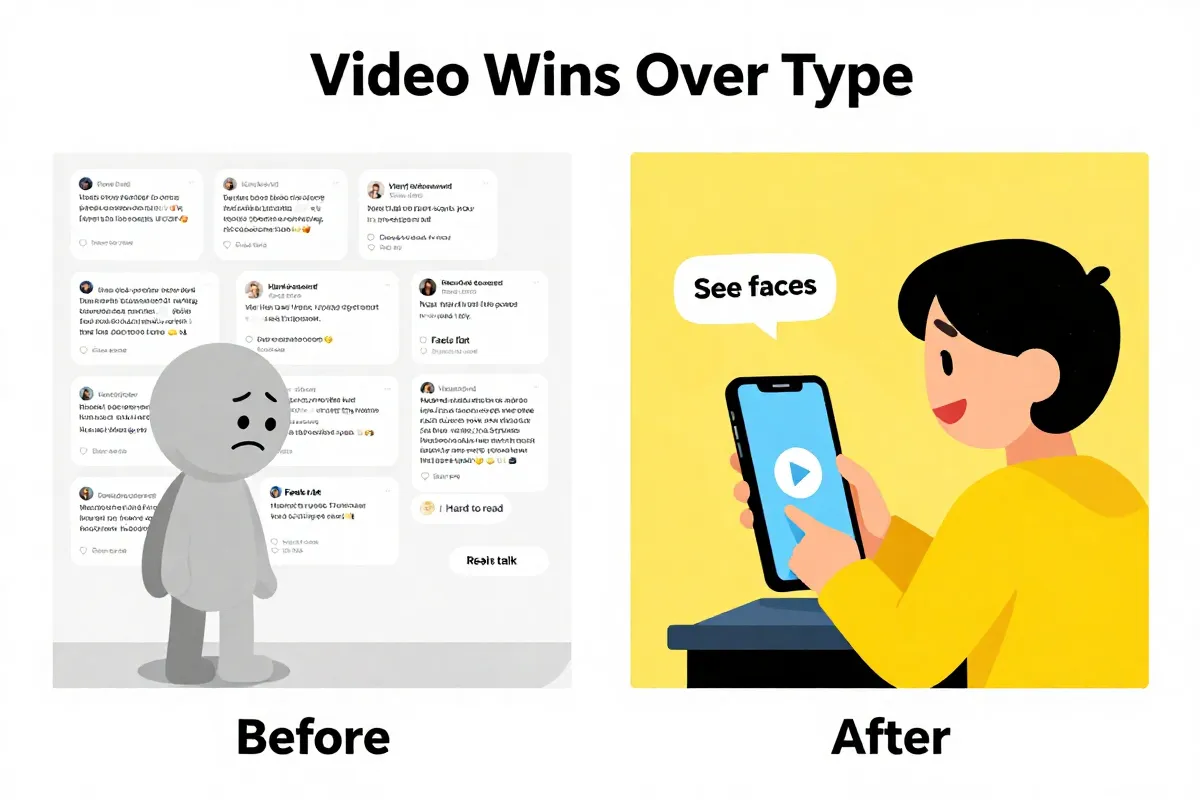
This is why video testimonials for lawyers are quickly becoming the new "word of mouth" in legal marketing. They provide an authenticity that text simply can't replicate. Potential clients aren't just reading words; they're seeing and hearing real people share their experiences.
Because seeing is believing. We know 82% of people report being convinced to buy a product or service after watching a video. This engagement is what drives genuine client trust and better conversion rates for your firm. Video just hits differently when you're trying to prove you're the right choice. Our clients often see the immediate impact of showing real faces, real stories (Learn more about driving growth with authentic customer videos).
The evolution of social proof in legal marketing
For decades, law firms built trust the old-fashioned way: Newspaper ads, billboards featuring stern faces, and maybe a reassuring TV spot. Those were the days of "Mad Men" marketing—polished, controlled, and, frankly, a little detached.
Then came the internet. Suddenly, potential clients weren't just relying on carefully crafted ads. The "star rating" era dawned. Platforms like Avvo and Yelp emerged, and a lawyer's reputation became a public scoreboard. But even these platforms had limitations. A simple star rating lacked context, and written reviews could feel generic or even manufactured.
That's the real issue. People want to know the real story. So the evolution continues. Today, the legal industry is waking up to the power of raw, unscripted video. Clients want to see empathy, hear genuine gratitude, and connect with a lawyer on a human level. Forget curated marketing; clients want authentic experiences. This is where video testimonials shine, building connection where words alone often fail. According to Nielsen’s data on trust in advertising, 88% of consumers trust recommendations from people they know. That makes word of mouth the most powerful tool.
- 1950s-1990s: Print & TV ads
- 2000s: Star ratings & written reviews
- 2010s-Present: Video testimonials
Short-form videos are increasingly popular, aligning with the trend of shorter attention spans and the rise of platforms like TikTok and Instagram Reels. In fact, short-form videos are 2.5 times more likely to be shared than long-form videos. So keep it short, keep it real.
What's next?
- AI-powered editing: quickly transform customer stories into engaging assets.
- Interactive video: Let potential clients ask direct questions to past clients.
Want to boost your own firm's reputation? See our guide on how to ask for reviews.
Why law firm video testimonials outperform written reviews
Video testimonials aren't just better; they're a different beast entirely. While written reviews offer a static glimpse of client satisfaction, video testimonials inject emotion and personality, creating a far more compelling narrative.
The absence of concrete ROI data for testimonials (both video and text-based) remains a frustrating gap for marketers. Yet, the impact of video is undeniable. Viewers are 82% more likely to buy after watching a video testimonial, according to Wyzowl's latest video marketing statistics.
It comes down to capturing what text simply can’t: micro-expressions, tone of voice, and the sheer relief of a client who's had a positive outcome. Someone can say they were satisfied in writing. But seeing their genuine smile and hearing the emotion in their voice makes all the difference.
Consider this:
- Written Review: "John Smith provided excellent legal assistance." (Generic. Could be anyone.)
- Video Testimonial: A client tears up recounting how your firm helped them win a custody battle. (Raw. Unforgettable.)
And here's a hard truth. People skim text. They might glance at a star rating and move on. But they'll often stop and watch a video, especially if it's short and engaging. Short-form videos are 2.5 times more likely to be shared, expanding your reach without extra effort.
So, ask yourself: Do you want to inform, or do you want to connect? If you're aiming for genuine connection and trust, video is the only real answer. Consider that video testimonials offer a compelling way for law firms to showcase their success stories, fostering authenticity and trust by allowing potential clients to see and hear real clients share their experiences. You can also check out our 10 proven ways to boost website conversions with customer testimonials.
The reality is that social proof, including testimonials, is crucial for lawyers as it establishes credibility and trust, influencing potential clients and improving search engine rankings.
Types of legal videos that drive client acquisition
Video testimonials aren't just a one-size-fits-all deal. The type of video you use should match the message you're trying to send.
Interview-Style Testimonials
These videos feature a client answering questions about their experience. It's conversational and allows for a deeper dive into the client's story. Think of it like a mini-documentary where the client is the star.
Use these when you want to:
- Show the emotional journey of a client.
- Highlight specific aspects of your service.
- Build a strong sense of connection.
But be careful. The success of an interview-style testimonial depends heavily on the interviewer's skill. A bad interviewer can lead to rambling answers and a boring video.
Case Study Videos
A case study video focuses on a specific client's problem, your solution, and the results they achieved. It's a structured format that showcases your expertise.
Use these when you want to:
- Demonstrate your problem-solving abilities.
- Provide tangible proof of your impact (e.g., "We reduced their litigation costs by 30%").
- Target clients with similar challenges.
These do require more planning. Script out the key points you want to cover. The video should tell a clear story, from problem to resolution. (By the way, remember to get client approval before publishing any case study video).
Short-Form Video Testimonials
These are quick, punchy videos, usually under 60 seconds. They're perfect for grabbing attention on social media. A short-form video testimonial is increasingly popular, aligning with the trend of shorter attention spans.
Use these when you want to:
- Make a quick, memorable impression.
- Share snippets of client satisfaction.
- Maximize shareability.
Here's the catch: you only have a few seconds to make an impact. Choose the most compelling soundbites from your clients. A genuine smile can go a long way in that time.
Ultimately, the best type of legal video depends on your goals and your audience. Experiment with different formats to see what resonates. Managing a law firm’s Google Business Profile, including reviews, enhances the firm's visibility on Google Maps and search results, influencing how potential clients perceive their services. But remember, authenticity is key, because people can spot a fake testimonial a mile away.
Short form social media clips for lawyer visibility
Short-form video clips for law firms is a must, especially with the rise of TikTok and Instagram Reels. These platforms offer a goldmine for reaching potential clients who might not even know they need a lawyer yet.
The truth is, short attention spans are a real thing. So grabbing attention fast is crucial. Short-form videos are 2.5 times more likely to be shared than long-form ones. Think of them as digital business cards that get passed around.
Here's why they work:
- Top-of-funnel awareness: Introduce your firm to a broad audience.
- Easy consumption: People can watch them on the go.
- Shareability: Engaging content gets spread quickly.
But do not just throw up any video. Create content that actually resonates. Show behind-the-scenes glimpses of your firm, answer common legal questions in a simple way, or share quick tips related to your practice area. And if you want to collect, manage, and display customer video testimonials on your website without complex logistics you can always check video testimonial software.
Deep dive case studies for complex practice areas
While short clips grab attention, some legal cases demand more context. Deep dive case studies are your chance to show, not just tell. These narrative-driven videos help personal injury or family law firms explain complex results and demonstrate genuine empathy.
For a personal injury firm, a narrative video could walk through a client's journey from accident to recovery. Show the accident scene (if appropriate), the medical treatments, and the emotional toll on the client and their family. But don't just state the facts.
Instead, let the client speak.
- Let them describe the pain, the frustration, and the relief they felt when your firm took their case.
- Show before-and-after footage (if applicable).
- Include interviews with family members to add another layer of emotional depth.
And the same goes for family law. Divorce and custody battles are emotionally charged. A case study video can show how your firm navigated a particularly difficult situation, such as a complex asset division or a child custody dispute. Focus on the client's transformation, not just the legal outcome. Show how you helped them rebuild their life after a difficult experience.
The key is to balance legal expertise with human emotion. These videos aren't about bragging about your legal prowess; they're about demonstrating that you understand your clients' struggles and that you're committed to helping them through tough times. Because video testimonial software helps law firms collect, manage, and display customer video testimonials on their website without complex logistics.
How to create compelling law firm testimonials
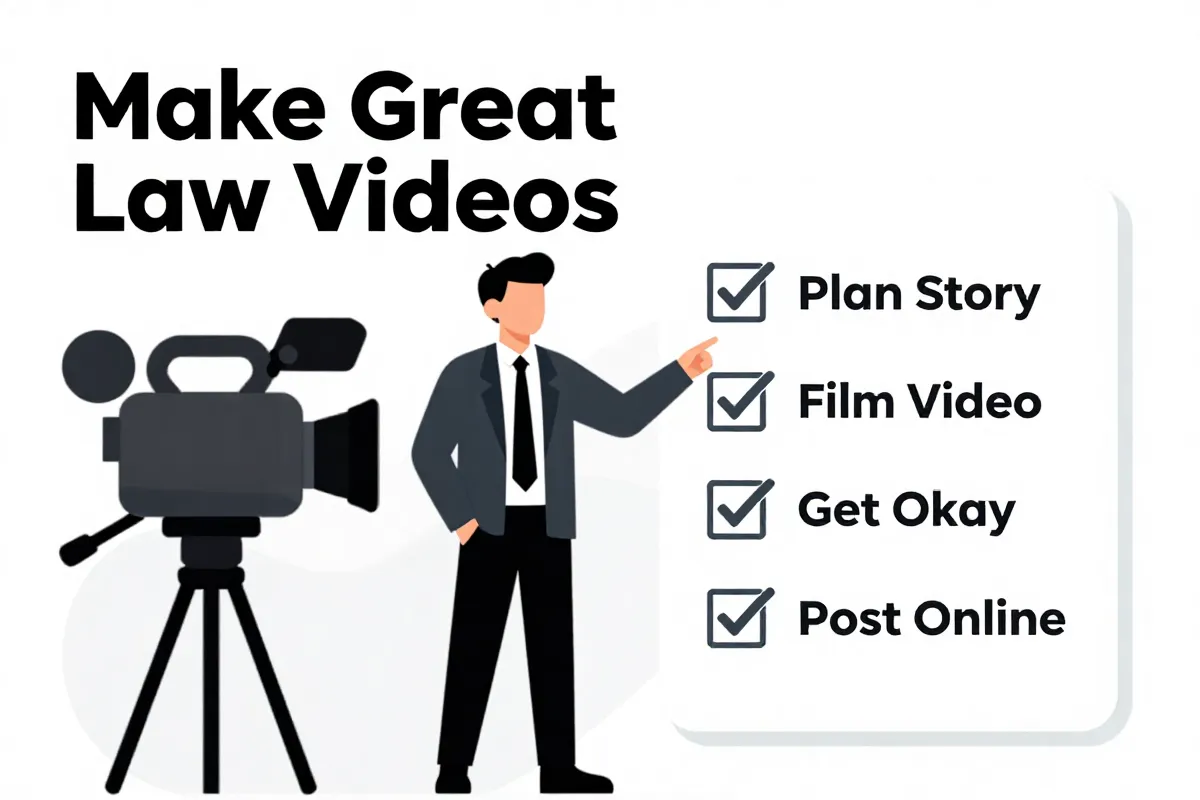
Creating compelling testimonials doesn't require Spielberg-level skills or a massive budget. With a bit of planning and the right approach, you can produce authentic videos that resonate with potential clients.
Scripting Tips that Convert
Start with a basic script, but don’t be afraid to let your clients speak freely.
- Focus on the problem: What challenges were they facing before hiring you?
- Highlight the solution: How did your firm help them overcome those challenges?
- Emphasize the results: What specific outcomes did they achieve?
The biggest mistake? Over-scripting. The goal is authenticity. Let your clients speak from the heart. Users report that potential clients connect more deeply with genuine emotion than polished performances. To get the most out of each testimonial, focus on these three elements.
Video Production on a Budget
You don't need a fancy studio. A smartphone and a well-lit room can suffice.
- Lighting is key: Natural light is your friend. Position your client near a window, but avoid direct sunlight.
- Audio matters: Use an external microphone (even a cheap lavalier mic will do) to improve sound quality.
- Keep it steady: Use a tripod or stabilize your phone against a solid surface.
The catch? Shaky footage and poor audio scream "amateur." And that can undermine your credibility. Take a little time to make sure the video and audio is as good as possible, within your budget. 88% of consumers trust recommendations from people they know above all other forms of marketing. Don't waste your chance to make a great first impression.
Turn Smartphone Filming into a High-Quality Testimonial
Smartphones today boast impressive camera capabilities. But here's the secret: it's not about the gear; it's how you use it.
- Shoot in 4K (if possible): This gives you more flexibility in post-production.
- Use the rule of thirds: Position your client off-center to create a more visually appealing composition.
- Record in a quiet environment: Minimize background noise to ensure clear audio.
But remember, smartphone cameras have limitations. Low-light performance can be poor, and autofocus can be unreliable. Test your setup before recording the actual testimonial. By the way, consider that video testimonials offer a compelling way for law firms to showcase their success stories, fostering authenticity and trust by allowing potential clients to see and hear real clients share their experiences.
Editing for Impact
Basic editing skills can transform a raw video into a polished testimonial. The right cuts can make all the difference.
- Trim the fat: Remove any unnecessary pauses or rambling statements.
- Add captions: Make your videos accessible to viewers who are deaf or hard of hearing (and those who watch videos with the sound off).
- Include a call to action: Tell viewers what you want them to do next (e.g., "Contact us for a free consultation").
The tricky part? Over-editing can make a video feel unnatural. Aim for a balance between polish and authenticity. Remember, you can always collect, manage, and display customer video testimonials on your website without complex logistics with our platform.
Next Steps
Start small. Record a few testimonials using your smartphone and a free editing app. Post these on your website and across your social media channels. Analyze the results, then refine your approach. Keep testing and learning!
Asking the right questions to get powerful responses
Asking the right questions is the difference between a forgettable testimonial and one that drives leads. Don't just ask "Were you satisfied?". Dig deeper.
Here are some examples of potent questions that will help clients share their stories:
- "What was the biggest challenge you were facing before you hired us?" (This frames the 'before' picture).
- "What specific results did you achieve working with our firm?" (Numbers matter).
- "How did our services differ from other legal help you've received?" (This creates differentiation).
- "What would you say to someone considering hiring us?" (Genuine advice is powerful).
The tricky part is the initial ask. You want honest feedback, but you don’t want to pressure anyone. The key is to approach clients who have had genuinely positive outcomes and to emphasize that their feedback will help others. Don’t be afraid to highlight the positive impact their story could have on potential clients.
But before you pick up the phone, link to the guide on how to ask for reviews without being intrusive. Asking for reviews the right way sets the stage for a smooth interaction that will ultimately benefit all parties involved.
Legal and ethical considerations for lawyers
Legal video testimonials aren't the Wild West; there are rules. Lawyers must tread carefully to ensure they're not running afoul of state bar advertising regulations or ABA guidelines.
Privacy is paramount. You can't just slap a client's face online without their explicit, informed consent.
- Consent forms: These need to be crystal clear about how the testimonial will be used, where it will be displayed, and for how long.
- Right to revoke: Clients must have the right to withdraw their testimonial at any time. No questions asked.
The bigger issue? State bar advertising rules. They vary, but generally, you need to ensure your video testimonials don't create "unjustified expectations" about the outcome of future cases. A client raving about a multi-million dollar settlement is great, unless it implies every client will receive the same payout. Because that's not how law works.
Avoid guarantees, promises, or any language that could mislead a potential client. This isn't about censorship; it's about compliance and maintaining your ethical obligations.
Essential elements of a client release form
A solid client release form is your insurance policy against future legal headaches. It confirms that your client understands how their testimonial will be used and that they're participating willingly.
Here are the non-negotiable items you need:
- Right to Edit: Specify that you (or your team) have the right to edit the video for clarity, length, or compliance purposes. (But make sure the edits don't misrepresent their original sentiment).
- Right to Distribute: State clearly where the testimonial might appear (your website, social media, marketing materials, etc.) and for how long. If you plan to use the video in paid advertising, include that too.
- Confirmation of Voluntary Participation: This isn't just a formality; it's crucial. The form should state, in plain language, that the client is providing the testimonial freely and without coercion. Because managing a law firm’s Google Business Profile, including reviews, enhances the firm's visibility on Google Maps and search results, influencing how potential clients perceive their services.
The bigger issue? Your client needs to understand that, once the video is out there, it's hard to put the genie back in the bottle. Make sure they're fully aware of the implications before they sign on the dotted line.
Software platforms for collecting legal testimonials
There are several video testimonial software platforms, but not all are created equal when it comes to the legal industry. What your firm needs is something that simplifies the collection process.
Most platforms claim to be user-friendly. But consider your clients. Are they tech-savvy millennials? Or are they senior citizens navigating a complex legal issue? Ease of use is paramount.
Here's a quick comparison:
FeatureTestimlyCompetitor X (per user reviews)Competitor Y (per user reviews)Remote RecordingYes, with guided prompts & mobile-friendly interfaceYes, but users report clunky mobile experience.Limited mobile support; primarily desktop-focused.Editing ToolsBasic trimming, branding options, captioningMore advanced editing, but steeper learning curve.Basic editing; can feel restrictive.Client SupportDedicated support team for setup and troubleshooting.Limited support; users report slow response times.Mixed reviews on support responsiveness.Price (per month)Transparent, tiered pricing based on usage. No hidden fees.Lower entry price, but additional fees for features like custom branding.Higher starting price; may be overkill for smaller firms.Ideal forLaw firms seeking simple remote testimonial capture with minimal technical hassle.Larger firms with dedicated marketing teams who need advanced editing features.Firms primarily focused on desktop-based testimonials and less on mobile users.
The bigger issue is removing friction. Potential clients are often hesitant to participate, seeing it as time-consuming. By using video testimonial software, law firms can collect, manage, and display customer video testimonials on their website without complex logistics.
Our platform simplifies testimonial collection by doing away with the need for professional film crews. We built a system with guided prompts and a straightforward interface to ensure your clients feel comfortable sharing their experiences, regardless of their tech skills. The goal here is to build trust, so don't make your clients jump through hoops.
How Testimly streamlines the collection process
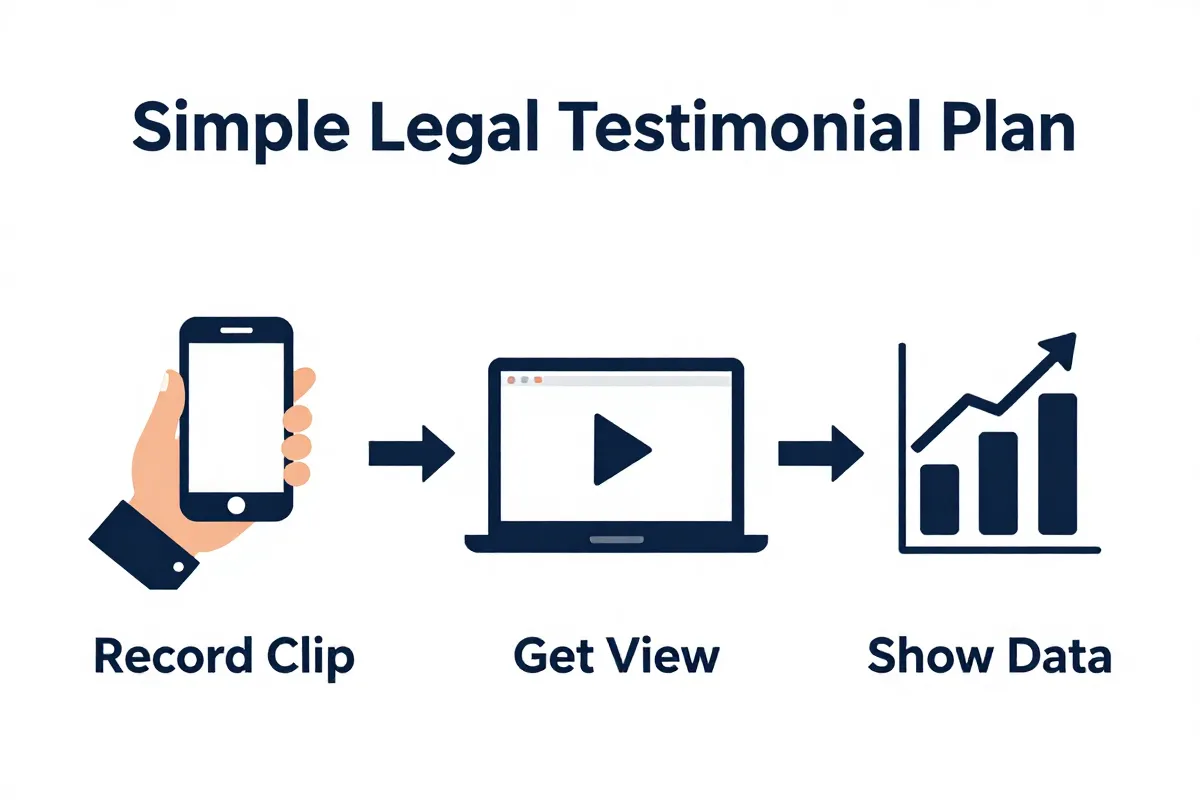
It's a pain to chase clients for testimonials, we get it. Our approach boils down to automated collection, saving you time and effort.
Forget scheduling a film crew or coordinating studio time. Send a simple link, and your clients record authentic videos on their own time, using their smartphones or webcams. (And yes, we remind them, so you don't have to.)
- Clients record at their convenience.
- Fewer logistical headaches for your team.
- You receive high-quality video, without a costly crew.
Because let’s face it: smaller law firms don't always have big marketing budgets. Our remote testimonial feature solves that. Clients rave about the ease with which they can create high-quality video testimonials. This means that we get more videos back and your firm can get an influx of potential clients.
Where to display videos for maximum conversion
Don't let those videos collect digital dust on a lonely "Testimonials" page. Repurposing is key to seeing a real return.
Think beyond that single page. Embed video testimonials on relevant practice area pages to instantly build trust with potential clients researching specific legal services.
Consider this:
- Personal injury testimonials on your personal injury page.
- Family law testimonials on your family law page.
- Business law testimonials on your business law page.
But the conversion potential doesn't stop there. Don't neglect your Google Business Profile. Adding video testimonials to your GBP enhances your firm's visibility on Google Maps and search results, influencing how potential clients perceive your services.
Think of your Google Business Profile as your digital storefront. A compelling video testimonial can be the difference between a potential client clicking on your listing or scrolling past. It comes down to strategic placement, since the location of your testimonials is critical to getting the most out of them. For more insight, link to the post on boosting conversions through strategic testimonial placement.
Using video in paid legal advertising campaigns
Video testimonials crush static images in paid ads; expect to see a dip in your cost per acquisition (CPA). Think about it. Which ad are you more likely to click: a generic headshot with a slogan or a real client expressing genuine gratitude for a legal victory?
Video testimonials are perfect creative for:
- Local Services Ads (LSAs): These ads appear at the very top of Google search results. And a video testimonial in your LSA can make you stand out.
- Facebook Ads: Target potential clients based on demographics, interests, and even life events. A compelling video can cut through the social media noise and grab their attention.
The hard truth? Video production costs can be a barrier. But remember those smartphone filming tips? You don't need a Hollywood budget. A heartfelt, authentic testimonial shot on a smartphone often outperforms a slick, overproduced ad. The key is capturing that genuine connection.
Common questions about lawyer video testimonials
What do you do if a client suddenly develops stage fright? Don't panic. Clients get camera-shy.
Here are some ways to ease their anxiety:
- Offer to conduct the interview remotely: It allows them to be in their own comfortable environment.
- Allow them to review questions in advance: This alleviates uncertainty.
- Emphasize the "unscripted" nature of the testimonial: Reassure them there’s no pressure to perform.
The goal is to make them feel at ease. Tell them that a genuine, heartfelt response is far more valuable than a polished performance. (Consider conducting a practice run to get them comfortable with the process).
How do you handle negative feedback in a video testimonial?
First, try to get ahead of it.
A smart move? Ask for feedback internally before publishing anything. It’s a chance to address their concerns directly. If that's not possible, don't bury it.
Address the negative feedback head-on. Show that you're listening and that you're committed to improvement. Because hiding negative reviews looks shady.
- Contact the client.
- Acknowledge the issue.
- Outline the steps you're taking to resolve it.
And depending on the situation, you might even create a follow-up video addressing the feedback and highlighting the changes you've made. Honesty and transparency build trust. But remember, if you plan to use any of the client's responses in your testimonials, make sure that you state that you have the right to edit these responses.
What are some frequently asked questions (FAQs) about lawyer video testimonials?
Potential clients often have similar questions. Addressing these head-on can preempt concerns and encourage more participation.
- "How long will the recording take?" (Reassure them it’s quick and easy).
- "What if I don't like how I look on camera?" (Offer basic editing to improve lighting or remove pauses).
- "Will I have to sign anything?" (Explain the consent form and their rights).
- "Can I see the video before it's published?" (Always offer a review period).
The key takeaway is transparency. Answer these FAQs prominently on your website or in your initial outreach. It builds trust and reduces hesitation.
What if a client gives a negative testimonial?
Negative feedback stings, for sure. But it's also gold dust if you handle it right.
Think of a negative testimonial as a free (albeit painful) usability test. Forget the urge to bury it. View it as a private signal that you need to focus on a new issue within your practice.
- Identify the core problem.
- Fix it internally.
- Then, publicly show how you addressed the concern.
The bigger issue is reputation management. Potential clients are savvy. They expect a few hiccups. What they don't expect is a business that ignores complaints. Showing you listen turns a negative into a positive.
How much does professional legal video cost?
The price of pro legal videos can range from "yeah, right" to surprisingly affordable. Expect to pay between $2,000 to $5,000 per video if you hire a full-blown production crew.
That's a problem if you're on a tight marketing budget.
So, what's the alternative? Video testimonial software. Platforms like ours handle everything from initial outreach to final editing for a flat monthly fee, typically between $0 to $100. That's a saving of around 98%.
Of course, there's a trade-off. You won't get the same level of polish as a professionally produced video. But with a few smartphone tricks and some basic editing, you can still create compelling testimonials that build trust and drive leads. And it won't break the bank.
Collect testimonials in minutes
The easiest way to get video and text reviews from your customers. Start for free and build trust instantly.